The New Era of Intelligent Crypto Wallets
Hey crypto enthusiasts,
"Which crypto wallet should we choose?"
That question comes up in almost every conversation between crypto investors, startups, traders, and businesses entering the Web3 space.
A few years ago, the answer was simple. People looked for a wallet that could store cryptocurrencies and process transactions securely. But in 2026, things are different.
Today's users want more than just storage. They want wallets that can detect suspicious activity, recover accounts without complicated seed phrases, automate transactions, and provide enterprise-grade security.
As digital assets become more valuable and blockchain adoption continues to grow, crypto wallets are evolving into intelligent security platforms. Technologies like Artificial Intelligence (AI), Multi-Party Computation (MPC), and Smart Accounts are leading this transformation, helping users manage assets with greater security, flexibility, and control.
So, what innovations are changing the future of digital asset protection?
Let's explore the seven crypto wallet innovations transforming digital asset security in 2026.
"Innovation distinguishes between a leader and a follower." Steve Jobs
Is Crypto Wallet Development Ready for 2027?
The crypto wallets of tomorrow will do much more than store digital assets. They will automate security, simplify user experiences, manage digital identities, and connect perfectly across multiple blockchain ecosystems.
Many of the technologies shaping this future, AI, MPC, Smart Accounts, and seedless recovery, are already transforming wallets in 2026. The question is no longer whether crypto wallets will evolve, but how quickly they will become the primary gateway to the digital economy.
1. AI-Powered Wallet Intelligence
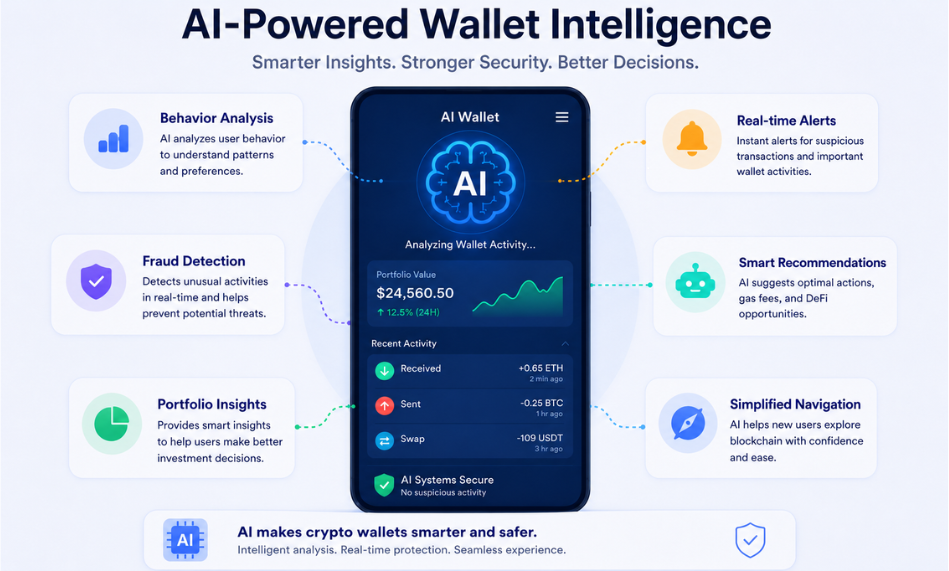
Artificial Intelligence is becoming a core component of modern crypto wallets. Instead of simply storing assets, wallets can now analyze user behavior, detect unusual activities, provide portfolio insights, and offer real-time transaction recommendations.
Businesses are leveraging AI to improve fraud detection, identify suspicious wallet interactions, and simplify blockchain navigation for new users.

Real-World Impact
A fintech company managing multiple digital assets can use AI-driven wallets to monitor transactions automatically and reduce operational risks.
2. MPC Technology Replacing Traditional Private Keys
Multi-Party Computation (MPC) has emerged as one of the most significant advancements in wallet security.
Traditional wallets rely on a single private key. If the key is lost or stolen, assets can become inaccessible. MPC eliminates this vulnerability by splitting cryptographic control across multiple parties.
Benefits of MPC Wallets:
|
Feature
|
Traditional Wallet
|
MPC Wallet
|
|
Single Point of Failure
|
Yes
|
No
|
|
Key Management
|
Complex
|
Simplified
|
|
Enterprise Security
|
Moderate
|
High
|
|
Recovery Options
|
Limited
|
Increased
|
|
Scalability
|
Medium
|
High
|
For enterprises handling large transaction volumes, MPC significantly reduces security risks while maintaining operational efficiency.
3. Smart Accounts and Account Abstraction
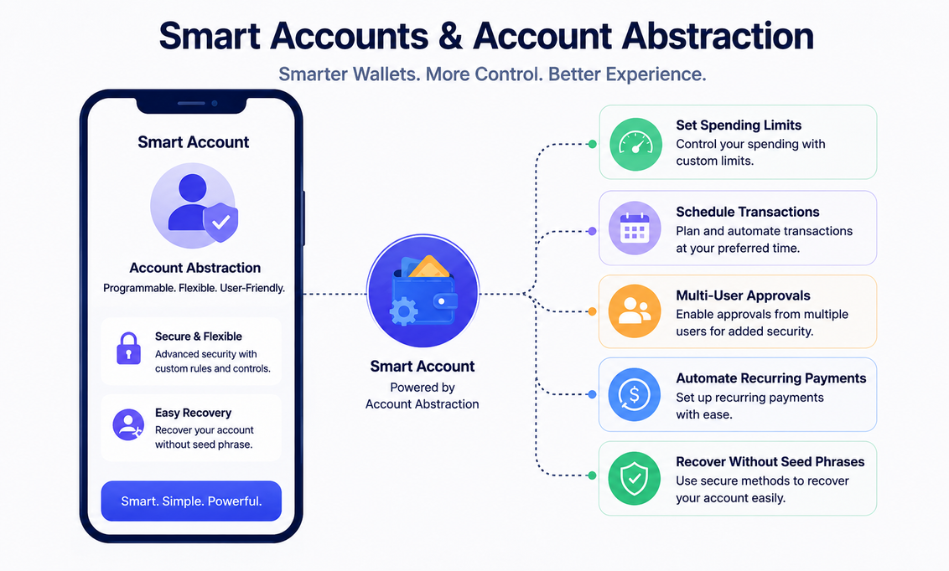
Smart Accounts are changing how users interact with blockchain networks. Powered by Account Abstraction, these wallets allow programmable transaction rules and increased flexibility.
Users can:
- Set spending limits
- Schedule transactions
- Enable multi-user approvals
- Automate recurring payments
- Recover accounts without seed phrases
This innovation makes blockchain technology more accessible to businesses and everyday users alike.

Vitalik Buterin once emphasized, “Improving usability is essential for mainstream adoption.”
4. Seedless Recovery and Passkey Authentication
Remembering and protecting seed phrases remains one of the biggest challenges in crypto.
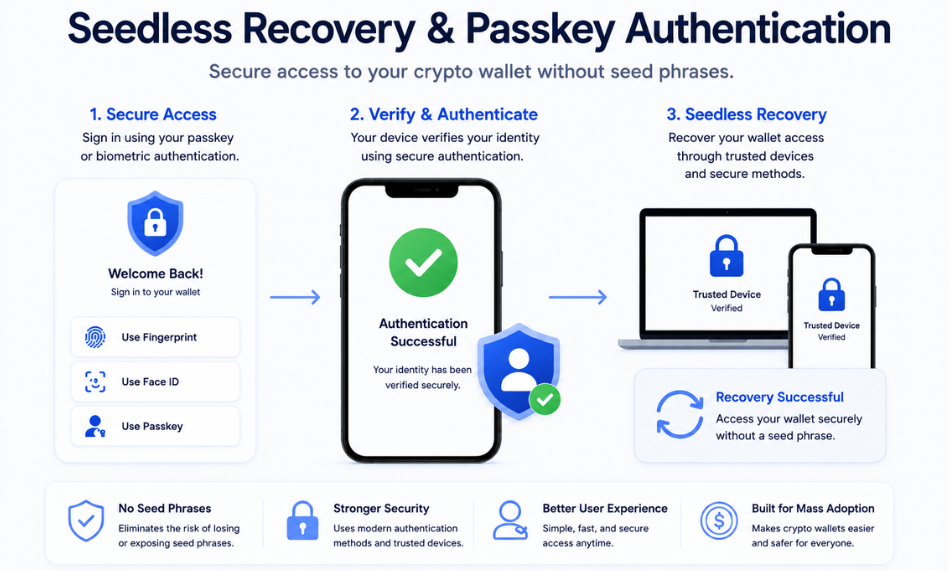
Modern wallets now support passkeys and seedless recovery systems, allowing users to regain access through trusted devices and secure authentication methods.

Why It Matters?
Businesses onboarding thousands of users cannot rely on complex recovery procedures. Simplified authentication increases adoption while reducing support costs.
Real Example
Many next-generation wallet providers are integrating biometric authentication and device-based security to eliminate dependency on seed phrases.
5. AI-Powered Threat Detection
Cyber threats continue to evolve alongside blockchain innovation.
Modern crypto wallets now use AI to:
- Detect phishing attempts
- Flag malicious smart contracts
- Monitor suspicious transactions
- Warn users before risky approvals
This proactive security approach helps protect users before damage occurs.
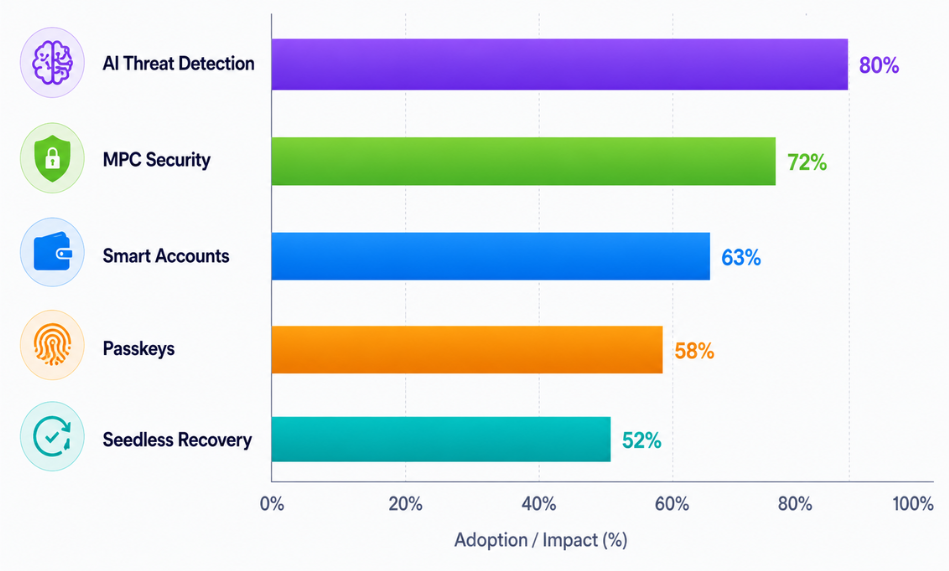
Bar Chart: Security Features Adoption in 2026

Organizations are increasingly prioritizing preventive security rather than reactive solutions.
6. Cross-Chain and Multi-Asset Wallet Ecosystems
The future of crypto is multi-chain.
Users now interact with multiple blockchain networks, including Ethereum, Solana, Polygon, and Layer-2 ecosystems. Modern wallets are evolving into unified platforms capable of managing assets across different chains from a single interface.
Businesses looking to scale globally benefit from improved interoperability and reduced operational complexity.
Organizations exploring Cryptocurrency Wallet Development 2.0 are increasingly adopting multi-chain architectures to support broader user engagement and future scalability.
For businesses seeking advanced ownership control and asset protection,
You can learn more about non-custodial wallet solutions here:
https://www.alwin.io/non-custodial-wallet-development
7. Enterprise-Grade Web3 Wallet Infrastructure
As institutional participation increases, enterprise-grade wallet infrastructure has become essential.
Modern organizations require:
- Role-based access controls
- Multi-signature approvals
- Compliance monitoring
- Treasury management
- Secure asset custody
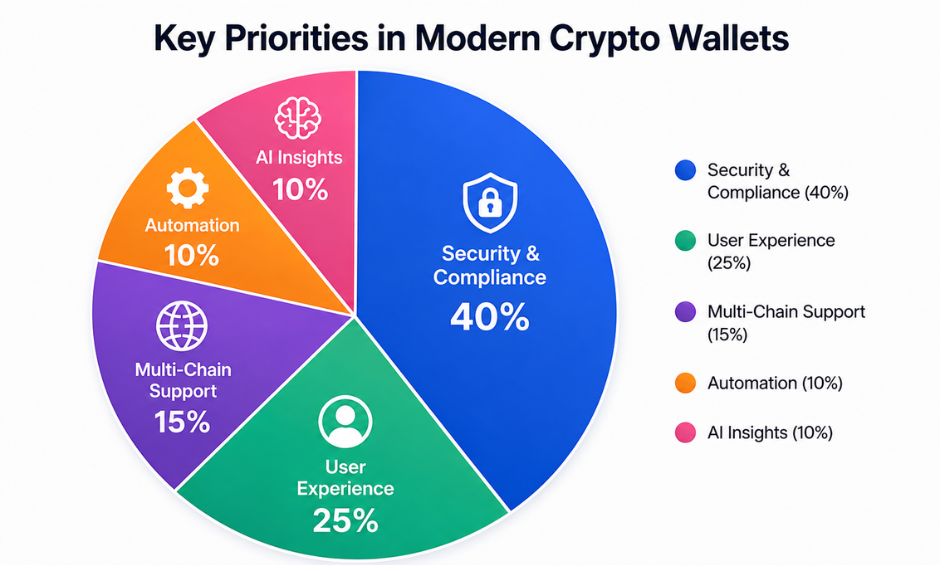
Pie Chart: Enterprise Wallet Priorities in 2026

This shift demonstrates how businesses are viewing wallets as strategic financial infrastructure rather than simple storage solutions.
For organizations building next-generation decentralized applications, Web3 wallet integration is becoming a critical investment.
Learn more here: https://www.alwin.io/web3-wallet-development
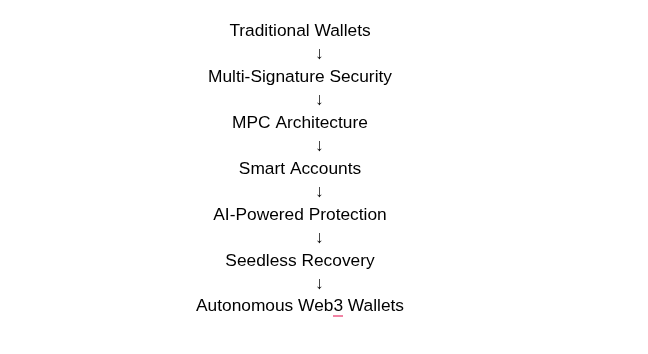
Infographic: The Evolution of Crypto Wallets

Looking Ahead: The Future of Digital Asset Security
The next phase of Crypto Wallet Development will focus on intelligent automation, predictive security, and consistent interoperability. Wallets are becoming digital identity hubs, financial management platforms, and secure gateways to decentralized ecosystems.
As Marc Andreessen famously noted, “Software is eating the world.” In 2026, intelligent crypto wallets are becoming a prime example of that transformation.
Businesses that adopt advanced wallet technologies today will be better positioned to navigate the fast-paced digital economy tomorrow.
The convergence of AI, MPC, and Smart Accounts is not just improving wallet functionality, it is fundamentally redefining digital asset security. From startups and fintech companies to institutional investors and Web3 enterprises, organizations are embracing these innovations to create safer, smarter, and more scalable digital experiences.
The future of crypto wallets is no longer about simply holding assets. It is about enabling trust, intelligence, and innovation at every stage of the digital asset journey.
"The future is already here — it's just not evenly distributed." — William Gibson