Real estate tokenization is moving from a conceptual idea into a practical investment model. By converting property ownership into digital tokens on a blockchain, businesses can expand investor participation, improve asset liquidity, and reduce the time and cost involved in property transactions.
As the tokenized real estate market continues to grow, choosing the right blockchain infrastructure becomes an important decision. The underlying network directly affects platform scalability, regulatory compliance, transaction efficiency, and investor trust. Among the available options, the XRP Ledger (XRPL) stands out as a strong choice for building secure, compliant, and scalable real estate tokenization platforms.
In this blog, we explain why XRPL is well-suited for real estate tokenization, how its ecosystem supports modern property platforms, and why it offers a reliable foundation for businesses entering the tokenized real estate space.
Why XRPL Is Ideal for Real Estate Tokenization?
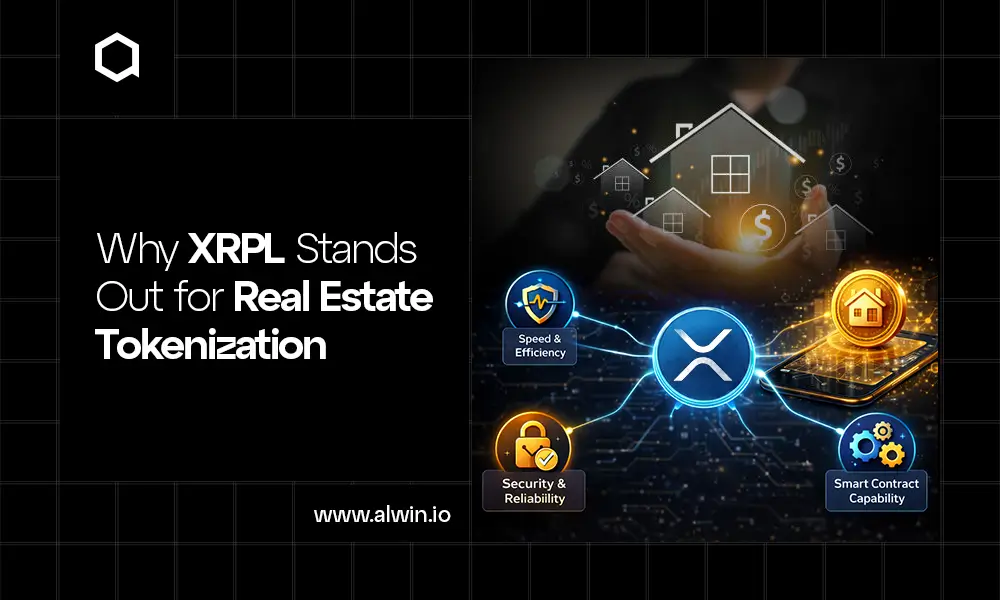
The XRP Ledger is designed for real-world asset use cases, making it a strong fit for real estate tokenization. Traditional property transactions are often slow, expensive, and operationally complex. XRPL addresses these challenges by offering fast transaction settlement, very low fees, and long-term network stability.
XRPL has been operating reliably for over a decade, providing a trusted environment for managing high-value assets such as property. The ledger allows native token creation directly on the network, removing the need for complex smart contract frameworks and reducing development risk.
In addition, XRPL includes built-in controls for asset issuance and transfer, allowing platforms to apply compliance rules, ownership restrictions, and investor protections. Combined with its native decentralised exchange (DEX) and liquidity tools, XRPL supports fractional property ownership and efficient secondary market trading.
Its energy-efficient consensus mechanism also makes XRPL a practical choice for businesses seeking sustainable blockchain solutions for real estate investment.
Key Benefits of Using XRPL for Tokenized Real Estate Assets
Fast and Low-Cost Transactions
XRPL processes transactions in seconds at very low cost. This efficiency allows real estate tokens to be issued, transferred, and traded with minimal delay, making property investment more accessible for global investors.
Enterprise-Grade Security
Security is essential when dealing with high-value real estate assets. XRPL provides a secure and transparent ledger where every transaction is validated and recorded permanently. Asset control features allow platforms to manage who can hold or transfer property tokens, supporting investor protection and regulatory alignment.
Easy Token Creation and Management
XRPL enables straightforward token issuance without complex smart contract development. Real estate platforms can tokenize properties efficiently, maintain clear ownership records, and manage asset lifecycle events with confidence.
Built-In Regulatory Compliance Controls
Regulatory compliance is one of the biggest challenges in real estate tokenization. XRPL supports features such as trust lines, transfer restrictions, freezing, and clawback, allowing platforms to meet legal and jurisdictional requirements while maintaining transparency and control.
Improved Liquidity Through Fractional Ownership
Tokenization on XRPL allows real estate assets to be divided into smaller digital shares, enabling fractional ownership. Investors can buy and sell these tokens more easily, improving liquidity and reducing traditional barriers associated with property investment.
Energy-Efficient and Sustainable Infrastructure
XRPL’s consensus mechanism consumes far less energy than proof-of-work blockchains. This makes it an environmentally responsible option for long-term real estate tokenization projects that value sustainability alongside performance.
XRPL Native DEX and AMM: Liquidity Advantages for Tokenized Real Estate
One of XRPL’s key strengths is its native decentralised exchange (DEX) and automated market maker (AMM), which are built directly into the ledger. Unlike external DeFi protocols, these features do not rely on complex smart contracts or third-party bridges, reducing technical risk and operational overhead.
XRPL’s AMM operates alongside its traditional order book, creating a hybrid liquidity model. This design supports better price discovery, deeper liquidity, and tighter spreads, which are important for trading tokenized real estate assets. For property platforms, this means more efficient secondary markets, faster settlement, and stronger investor confidence.
Roadmap for Launching an XRPL Real Estate Tokenization Platform
Step 1: Define the Use Case and Asset Scope
Identify the type of real estate assets to be tokenized, ownership structures, investor access rules, and revenue models. Assess regulatory requirements early to ensure the platform is built on a compliant foundation.
Step 2: Select XRPL as the Core Infrastructure
Choose XRPL for its proven reliability, fast settlement, and low transaction costs. Evaluate how XRPL’s native tokenisation and exchange features align with platform scalability goals.
Step 3: Design the Architecture
Plan wallet integration, token management systems, investor dashboards, and administrative controls. Focus on secure asset handling and a simple user experience.
Step 4: Issue and Configure Tokens on XRPL
Create property-backed tokens on XRPL and configure trust lines and transfer controls. Apply features such as freeze or clawback where required for compliance and investor protection.
Step 5: Enable Trading and Liquidity
Integrate XRPL’s native DEX and AMM to support trading and liquidity. This allows investors to buy and sell real estate tokens with minimal friction.
Step 6: Implement Security and Compliance Measures
Add transaction monitoring, access controls, KYC processes, and audit trails to align with regulatory standards across target markets.
Step 7: Test the Platform Thoroughly
Conduct functional, security, and performance testing in controlled environments to ensure reliability before launch.
Step 8: Launch and Onboard Users
Deploy the platform on the XRPL mainnet and onboard property issuers, investors, and partners with clear documentation and support.
Step 9: Monitor, Optimise, and Scale
Continuously monitor platform performance, liquidity, and regulatory changes. Roll out updates to support long-term scalability and market growth.
Why XRPL Is a Long-Term Choice for Tokenized Property Projects?
As a real estate tokenization platform development company, Wealwin focuses on building solutions designed for long-term success. XRPL supports this approach by offering a stable, scalable, and regulation-friendly blockchain infrastructure.
Its ability to handle high transaction volumes with low fees makes XRPL suitable for platforms managing ongoing property investments, regular distributions, and active secondary markets. Built-in asset controls help maintain legal compliance while strengthening investor trust.
Conclusion
XRPL has established itself as one of the most reliable blockchains for real estate tokenization platforms. With fast transaction speeds, minimal fees, built-in asset management features, and native liquidity tools, it provides a strong foundation for creating and managing tokenized property assets.
As the tokenized real estate market continues to expand globally, platforms built on XRPL benefit from long-term stability, transparency, and regulatory flexibility. For businesses planning to launch or scale a real estate tokenization platform, Wealwin delivers future-ready solutions powered by XRPL, supporting secure, compliant, and sustainable growth in the digital property economy.