For years, many crypto users relied on centralized exchanges to store their digital assets because of their convenience. Today, that mindset is changing as more people recognize the importance of owning and controlling their assets directly.

Non-custodial wallet development is gaining popularity among investors, businesses, and Web3 users seeking greater security, ownership, and financial independence. By allowing individuals to manage their own private keys, these wallets eliminate reliance on third-party custodians and give users complete control over their digital assets.
This transformation is being driven by one of the world's most influential cryptocurrency markets, where digital asset ownership continues to grow quickly. More than 65 million adults are estimated to own cryptocurrencies, representing nearly 28% of the adult population. As adoption increases, demand for secure and user-controlled wallet solutions continues to rise.
Security concerns are also accelerating the shift toward self-custody. Following several high-profile exchange failures and cybersecurity incidents, nearly 70% of crypto holders now consider security their top priority when choosing a crypto wallet.
Meanwhile, the expanding Web3 ecosystem is creating new opportunities for innovation. With DeFi Total Value Locked (TVL) exceeding $100 billion globally, alongside the growth of NFTs, blockchain gaming, DAOs, and decentralized applications, users increasingly require wallets that offer stable access to decentralized environments.
Enterprise adoption is further strengthening market growth. Blockchain spending is projected to grow at a CAGR of over 40% through 2030, driving investment in digital asset management, tokenization, digital identity, and blockchain-powered financial services.
As AI, DeFi, NFTs, and Web3 technologies continue to evolve, non-custodial wallets are becoming more than storage tools, they are emerging as intelligent platforms for managing digital assets and interacting with decentralized ecosystems.
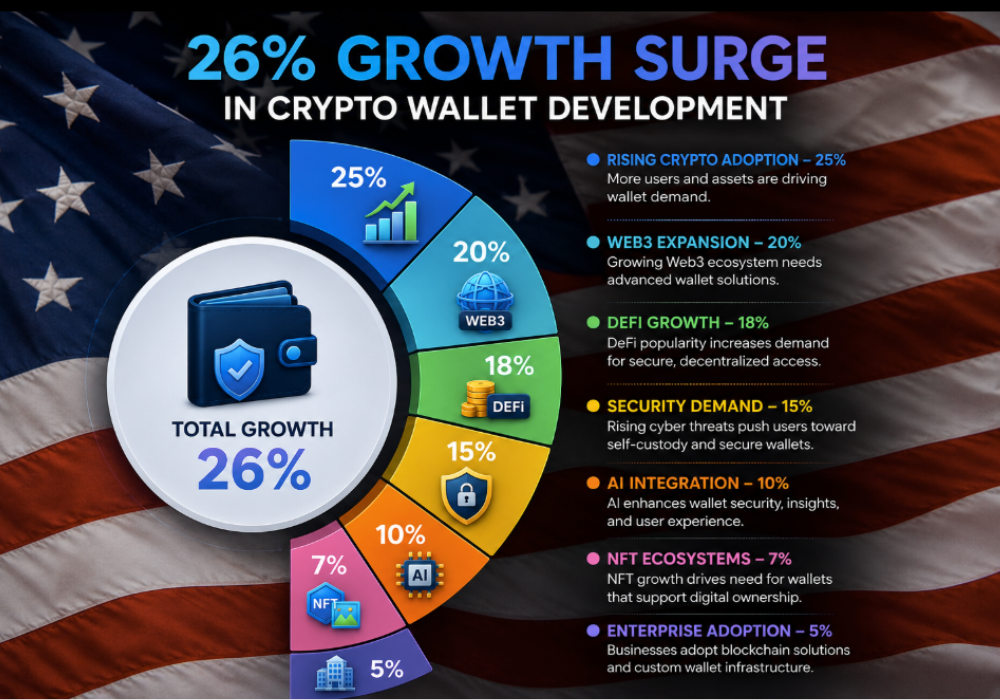
Fueled by these trends, crypto wallet development is projected to experience an estimated 26% growth surge, making non-custodial wallets one of the fastest-growing segments in digital finance and a key driver of future blockchain innovation.
Understanding Non-Custodial Wallets
As digital asset ownership becomes increasingly important, non-custodial wallets are gaining popularity as a secure way to manage cryptocurrencies. Unlike centralized platforms, these wallets give users full control of their private keys and digital assets, eliminating reliance on third parties.
Why Non-Custodial Wallets are Growing?
- Complete ownership of digital assets
- Full control over private keys
- Improved privacy and security
- Direct access to blockchain networks
- Easy interaction with DeFi, NFTs, and Web3 applications
- Greater flexibility across multiple ecosystems
As blockchain adoption expands, the principle of "Not your keys, not your coins" continues to highlight the importance of self-custody. For many users, non-custodial wallets are becoming a key tool for achieving greater financial independence in the digital economy.
Why Businesses are Investing in Crypto Wallet Development?
As digital asset adoption continues to grow, businesses are investing in Crypto Wallet Development to improve security, improve user experiences, and support participation in the expanding Web3 economy. Modern wallets have evolved into powerful platforms for digital payments, asset management, and decentralized interactions.
"Technology is best when it brings people together and empowers them." — Matt Mullenweg
Key Investment Drivers
- Growing demand for digital asset ownership
- Access to Web3, DeFi, NFTs, and blockchain applications
- Improved security through self-custody and advanced authentication
- Cross-chain support for stable asset management
- AI-driven features for fraud detection and user insights
- Scalable infrastructure for enterprise digital asset management
As blockchain technology becomes more mainstream, organizations that invest in secure and innovative wallet solutions will be better positioned to capitalize on future opportunities in digital finance and Web3 ecosystems.
The Technologies Driving Modern Non-Custodial Wallet Development
As the blockchain ecosystem continues to expand, non-custodial wallets are advancing beyond simple cryptocurrency storage. Modern wallet development focuses on delivering stronger security, stable blockchain connectivity, regulatory readiness, and a better user experience. These advancements are helping businesses build reliable wallet solutions that support long-term growth in the decentralized economy.
"Innovation distinguishes between a leader and a follower." — Steve Jobs
Core Technologies Transforming Non-Custodial Wallets
Technology
|
Role in Non-Custodial Wallets
|
Business Benefit
|
Multi-Party Computation (MPC)
|
Protects private keys by splitting cryptographic operations across multiple parties
|
Stronger security with reduced risk of key compromise
|
Multi-Signature Authentication
|
Requires multiple approvals before executing transactions
|
Improved protection for enterprise and institutional wallets
|
Cross-Chain Interoperability
|
Enables users to manage assets across multiple blockchain networks
|
Greater flexibility and improved user experience
|
Smart Contract Wallets
|
Supports programmable wallet features and automated transactions
|
Improved functionality for Web3 applications
|
Biometric Authentication
|
Uses fingerprint or facial recognition for secure wallet access
|
Faster and more secure authentication
|
Secure Backup & Recovery
|
Provides reliable wallet recovery without compromising ownership
|
Reduced risk of permanent asset loss
|
Regulatory Compliance Integration
|
Supports KYC, AML, and compliance-ready infrastructure where required
|
Easier adoption for enterprise and financial platforms
|
Hardware Wallet Compatibility
|
Connects with offline devices for cold storage protection
|
Maximum security for high-value digital assets
|
Modern non-custodial wallets combine these technologies to deliver secure, scalable, and user-friendly solutions that support the growing demands of Web3, DeFi, NFTs, and enterprise blockchain applications.
Enterprise Adoption Is Accelerating Non-Custodial Wallet Development
Businesses across multiple industries are increasingly investing in non-custodial wallet development as digital assets become part of mainstream financial services. These wallets provide organizations with greater control over asset management while reducing dependence on centralized platforms.
Why Enterprises are Choosing Non-Custodial Wallets?
- Complete ownership of digital assets and private keys
- Secure management of tokenized assets and digital identities
- Multi-chain compatibility for broader blockchain integration
- Support for DeFi, NFTs, and Web3 applications
- Enterprise-grade security with MPC and multi-signature protection
- Scalable infrastructure for future blockchain expansion
- Compliance-ready architecture for evolving regulatory requirements
As blockchain adoption continues to grow, non-custodial wallets are becoming an essential part of enterprise digital transformation, helping organizations build secure, transparent, and decentralized financial ecosystems.
Key Technologies Powering Modern Non-Custodial Wallets
The newest generation of crypto wallets includes advanced technologies designed for scalability and security.
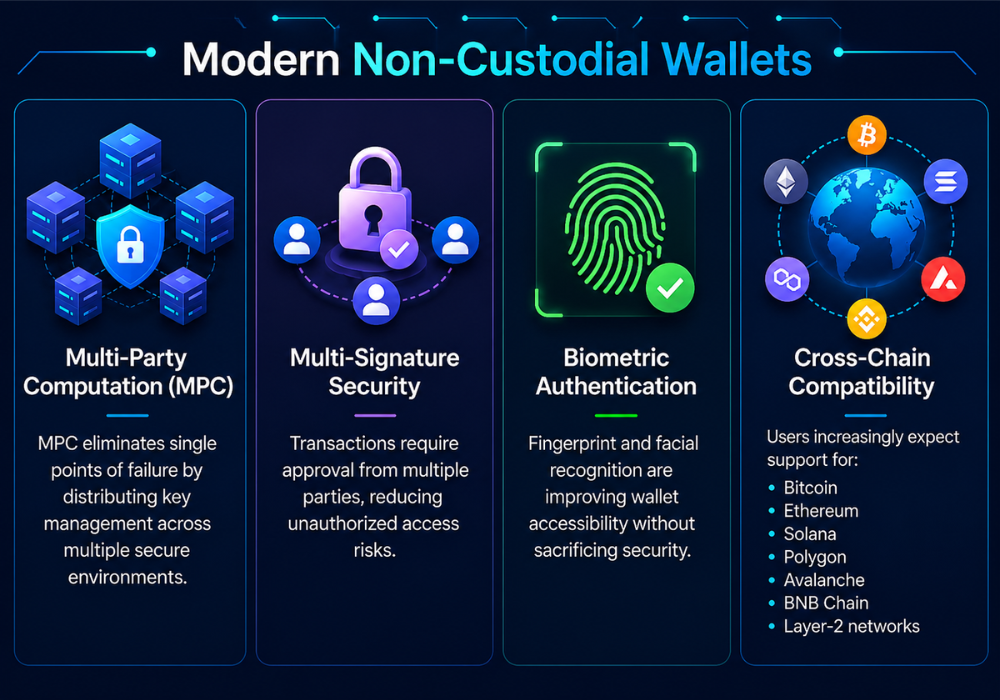
Cost Comparison of Modern Crypto Wallet Development
|
Development Level
|
Estimated Cost Range
|
|
Basic Wallet
|
$15,000 – $35,000
|
|
Multi-Chain Wallet
|
$35,000 – $80,000
|
|
DeFi & NFT Wallet
|
$50,000 – $120,000
|
|
Enterprise Wallet Platform
|
$100,000 – $300,000+
|
How Web3 Is Reshaping Wallet Functionality?
The traditional concept of a crypto wallet is rapidly expanding. Future wallets will serve as digital gateways to the decentralized internet.
Beyond Payments
Users increasingly expect wallets to manage:
- Digital identities
- NFT collections
- Tokenized real-world assets
- Gaming assets
- DeFi investments
- Governance participation
As Web3 adoption accelerates in the United States, wallets are becoming essential infrastructure rather than optional tools.
The Future of Non-Custodial Wallets and Digital Ownership
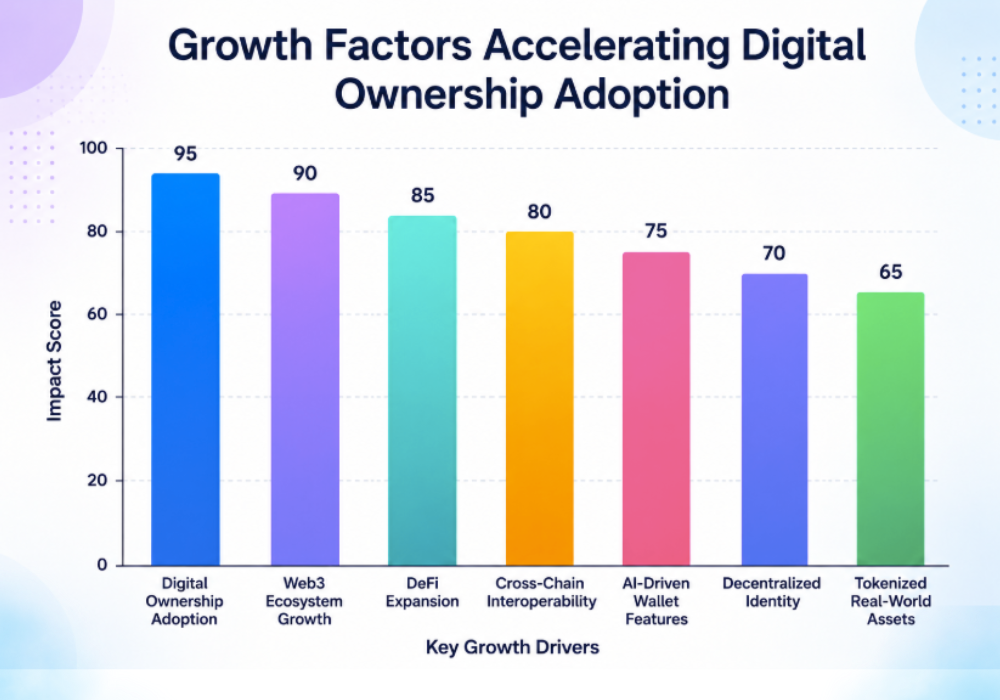
As digital ownership continues to gain momentum, non-custodial wallets are becoming a critical component of the Web3 ecosystem. Growing adoption of decentralized finance (DeFi), digital identities, tokenized assets, and cross-chain applications is driving demand for secure self-custody solutions.
Industry trends indicate that future wallet development will focus on increased security, stable interoperability, AI-assisted asset management, and user-controlled digital ownership. As a result, non-custodial wallets are evolving from simple storage tools into comprehensive gateways for managing assets, identities, and decentralized experiences.
"The most powerful technologies are those that empower individuals." — Satya Nadella