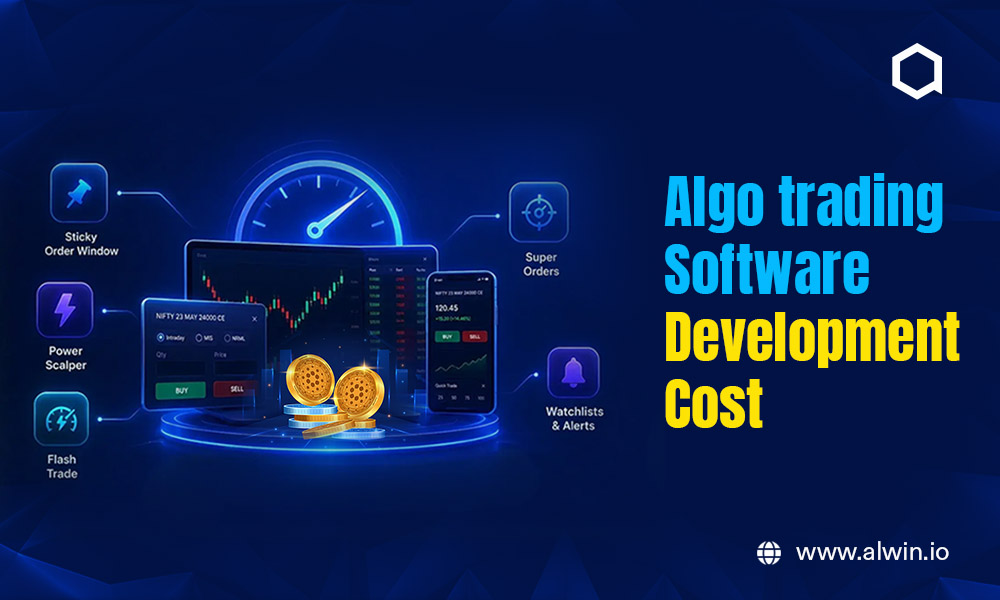
Algorithmic trading has moved from a niche Wall Street tool to a mainstream demand across crypto exchanges, fintech startups, and brokerage firms. As more businesses look to automate trading strategies and offer faster, smarter execution to their users, one question comes up before any other: how much does algo trading software development actually cost?
The honest answer is it depends. Costs can range from a few thousand dollars for a basic trading software setup to well over six figures for a fully custom, enterprise-grade platform with AI-driven strategies and multi-exchange integrations. The final number hinges on factors like development approach, feature complexity, compliance requirements, and the team you choose to build with.
In this guide, we'll break down exactly what drives algo trading software development costs, compare custom builds against white-label solutions, highlight hidden expenses many businesses overlook, and help you understand what kind of investment makes sense for your business goals.
Understanding the Process of Building Algo Trading Software
Algo trading software development is the process of building a platform that uses pre-programmed rules and algorithms to execute trades automatically, without manual intervention. Instead of placing orders by hand, traders set specific conditions: price, volume, timing, or technical indicators and the software executes trades the moment those conditions are met.
Step 1: Planning the Strategy
Everything starts with a plan. What kind of trading should the software do buying dips, following trends, or catching price gaps between markets? This step decides the "rules" the bot will follow.
Step 2: Choosing the Right Tools
Developers pick the programming languages and tools that fit the job, usually something fast and reliable, since trading decisions often happen in seconds.
Step 3: Connecting to the Market
The software needs to "talk" to crypto exchanges, reading live prices, checking order books, and placing trades. This connection happens through APIs.
Step 4: Testing with Past Data
Before using real money, the strategy is tested against old market data. This shows how it would've performed in the past a safety check before going further.
Step 5: Adding Risk Controls
No trading software should run without safety limits like automatic stop-loss and take-profit settings.
Step 6: Practice Run
The bot is tested in real market conditions using fake funds. This helps catch any last issues before going live.
Step 7: Securing the System
Since money and data are involved, strong security requires encrypted logins, two-factor authentication, and no direct withdrawal access for the bot itself.
Step 8: Launching and Monitoring
Once live, the software is closely watched with alerts and dashboards to flag anything unusual.
Step 9: Ongoing Improvements
Markets change constantly, so the software needs regular updates to stay effective and competitive.
Key Factors of Algo Trading Software Development Cost
Several variables determine the final cost of building algo trading software. Understanding each one helps businesses budget accurately.
1. Development Approach
Building algo trading software from scratch costs significantly more than opting for a pre-built or semi-customized solution. A fully custom build requires a longer development timeline and a larger specialized team, while a ready-made foundation reduces cost by relying on an already-tested codebase.
2. Number of Exchange/Broker Integrations
Each additional exchange or broker API integration adds development time and testing effort. A platform connecting to a single exchange costs less than one supporting multi-exchange execution.
3. Trading Strategy Complexity
Basic strategy automation costs less than advanced features like AI/ML-based strategy generation, high-frequency trading capability, or multi-asset strategy execution.
4. Security and Compliance Requirements
Implementing AES-256 encryption, KYC/AML verification, two-factor authentication, and role-based access control adds development effort but is essential for handling user funds and meeting regulatory standards.
5. UI/UX Scope
A platform built only for web costs less than one developed across web, mobile, and desktop with a polished, custom-designed interface.
8. Post-Launch Support and Maintenance
Ongoing costs don't stop once your platform goes live. Beyond the initial build, you should budget for bug fixes, feature updates, server maintenance, and compliance updates to keep the platform secure, current, and running Easily.
What Is the Cost of Building an Algo Trading Software?
The cost of algo trading software development typically falls into three broad tiers, depending on features, complexity, and the development approach chosen.
1. By Development Approach
|
Approach
|
Cost Range
|
Timeline
|
|
Pre built/ Semi customized solution
|
$5,000- $15,000
|
2-4 Weeks
|
|
Mid-level Custom Build
|
$15,000 - $40,000
|
2-4 Months
|
|
Fully custom, Enterprise Grade Platform
|
$40,000 - $100,000+
|
4-8 Months
|
2. By Feature Tier
Basic Tier: Single-exchange integration, simple strategy automation, basic dashboard, standard security lowest cost.
Mid-Tier: Multi-exchange support, backtesting module, risk management tools, mobile-responsive UI moderate cost.
Enterprise Tier: AI/ML-based strategy engines, HFT capability, multi-asset support, advanced compliance, custom UI/UX across platforms highest cost.
Custom vs. Pre-Built Algo Trading Software: Which Costs Less?
Choosing a trading software between a fully custom build and a pre-built solution is one of the biggest cost decisions in algo trading software development. Here's how they compare.
1. Upfront Cost
Pre-built solutions cost significantly less upfront since the core codebase, trading engine, and basic features are already developed and tested. A custom build means coding everything from scratch, so it naturally comes with a higher upfront cost.
2. Development Timeline
Pre-built platforms can be customized and launched in as little as 2–4 weeks. Fully custom platforms typically take 4–8 months depending on feature complexity, pushing time-to-market further out.
3. Long-Term Ownership Cost
With a custom build, you own the entire codebase outright so there are no recurring licensing fees to worry about. Pre-built solutions may involve licensing or customization fees, though these are often still lower than the total cost of a custom build over time.
4. Flexibility and Scalability
Custom platforms offer maximum flexibility every feature, integration, and workflow can be customized exactly to business needs. Pre-built platforms offer faster deployment but may have some limitations on deep customization, depending on the provider.
5. Risk Factor
Custom development carries higher risk if requirements change mid-project or if the development team lacks specialized algo trading experience. Pre-built solutions reduce risk since the core technology is already market-tested.
6. Best Fit By Business Type
- Startups & New Entrants: Pre-built or semi-customized solutions offer faster, lower-cost market entry.
- Established Exchanges & Brokerages: Custom development makes sense when unique features, deep integrations, or proprietary strategies are core to the business model.
- Enterprises Scaling Fast: A hybrid approach starting with a pre-built foundation and layering custom features often balances cost and speed effectively.
What Should You Know About Hidden Costs Before Building an Algo Trading Platform?
Beyond the initial development quote, several recurring or overlooked expenses can significantly impact the total cost of running an algo trading platform.
1. Exchange and Broker API Licensing Fees
Many exchanges charge fees for high-frequency API access or premium data feeds. These costs scale with trading volume and the number of integrated exchanges.
2. Regulatory and Compliance Costs
Meeting KYC/AML requirements, data protection laws, and regional financial regulations often involves legal consultation, compliance audits, and periodic policy updates all of which add ongoing cost.
3. Server and Infrastructure Costs
Algo trading platforms require trustable, low-latency hosting with high uptime guarantees. Cloud infrastructure, dedicated servers, and failover systems all contribute to recurring monthly expenses.
4. Ongoing Maintenance and Bug Fixes
Markets and exchange APIs change frequently. Regular updates, bug fixes, and compatibility patches are necessary to keep the platform stable and secure.
5. Third-Party Data and Analytics Tools
Real-time market data feeds, charting libraries, and analytics integrations are often priced separately and billed on a subscription basis.
6. Security Audits and Penetration Testing
Since the platform handles financial transactions, regular third-party security audits are a must to catch vulnerabilities early and these typically come as an added cost.
7. Customer Support Infrastructure
As the user base grows, providing trustable support becomes a recurring operational cost.
Why Choose WeAlwin Technologies for Algo Trading Software Development?
WeAlwin Technologies brings deep, specialized experience in Algo trading software Development secure, scalable for exchanges, brokerages, and fintech businesses worldwide.
1. Trusted Experience Building Algo Trading & Crypto Platforms
With a strong track record across algo trading software, white-label crypto trading platforms, and exchange development, WeAlwin understands the technical and regulatory specific to trading platforms.
2. Flexible Development Approach
Whether you need a fully custom build or a faster, semi-customized solution, WeAlwin customize the development approach to match your timeline, budget, and business goals.
3. Enterprise-Grade Security Standards
Every platform is built with AES-256 encryption, two-factor authentication, role-based access control, and KYC/AML compliance providing user funds and data remain protected.
4. Multi-Exchange API Integration Capability
WeAlwin's team has hands-on experience integrating multiple exchange and broker APIs, enabling platforms to support diverse trading environments without performance bottlenecks.
5. Backtesting and Risk Management Built-In
Platforms are equipped with strong backtesting modules and risk management tools, allowing users to validate strategies before deploying real capital.
6. End-to-End Support
From initial consultation and architecture planning to deployment, compliance guidance, and post-launch maintenance, WeAlwin provides complete support throughout the platform's lifecycle.
7. Transparent, Cost-Effective Pricing
WeAlwin offers competitive development pricing without compromising on quality, security, or scalability helping businesses maximize ROI on their investment.