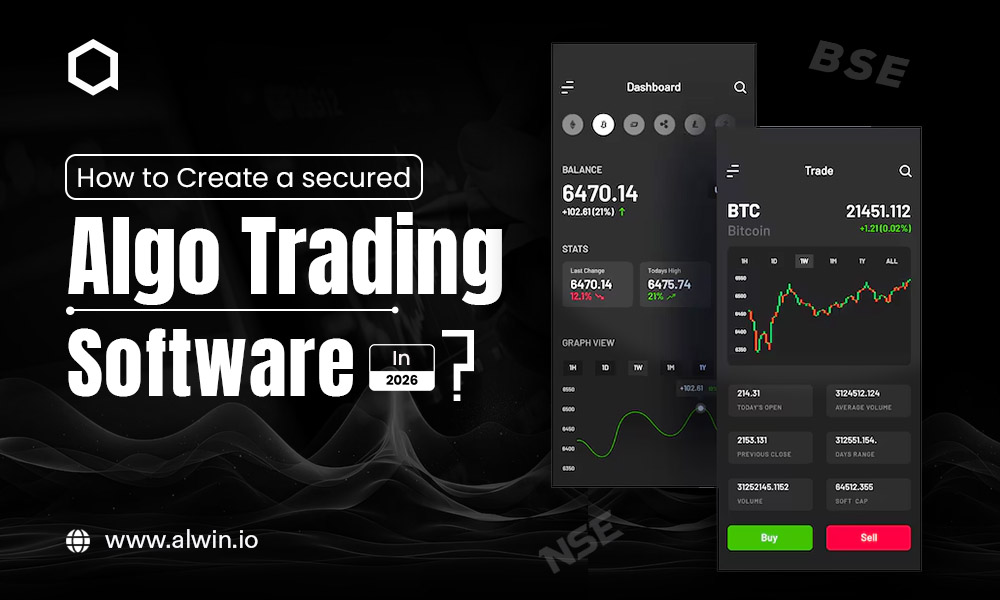
The trading world in 2026 is moving faster than ever, and AI-powered algo trading software is leading the shift. From hedge funds and crypto exchanges to retail traders and fintech startups, everyone is looking for smarter ways to analyze markets, automate trades, and reduce human error. What once required an entire team of analysts can now be handled by intelligent algorithms that scan massive amounts of market data in real time, identify profitable opportunities, and execute trades within milliseconds.
That’s exactly why AI-powered custom algo trading platforms have become one of the trends in fintech. Traders today don’t just want automation, they want predictive analytics, machine learning strategies, risk management tools, and real-time decision-making systems that can adapt to changing market conditions instantly. Whether it’s stocks, forex, commodities, or crypto, AI-driven trading software is helping businesses maximize profits while minimizing emotional trading mistakes.
Modern investors are increasingly relying on AI to detect patterns humans might miss, forecast market trends, and execute high-frequency trades with precision. At the same time, the rise of cloud computing, big data, and APIs from major exchanges has made building custom algo trading software more accessible than ever before.
If you’re planning to enter the fintech or trading industry, this is the perfect time to invest in AI-powered algo trading software development. In this guide, we’ll explore how to create a powerful custom algo trading platform in 2026, the technologies behind it, must-have features, development process, and why AI is transforming the future of automated trading.
What is AI-Powered Algo Trading Software?
AI-powered algo trading software is an advanced trading system that uses artificial intelligence and automated algorithms to analyze market data, predict price movements, and execute trades automatically without human intervention. Instead of manually monitoring charts and placing trades, the software makes data-driven decisions in real time based on predefined strategies, historical patterns, technical indicators, and AI-based predictions.
Traditional trading bots follow fixed rules like “buy when the price drops 5%” or “sell when RSI crosses 70.” But AI-powered algo trading software goes a step further. It continuously learns from market behavior, adapts to changing trends, and improves trading strategies using technologies like machine learning, predictive analytics, and real-time data processing.
For example, imagine a crypto trading platform that uses AI-powered algo trading software to trade Bitcoin. The software constantly monitors live market prices, trading volume, news sentiment, social media trends, and historical chart patterns. If the AI detects that Bitcoin is likely to rise based on previous market behavior and current signals, it automatically places a buy order within milliseconds. Later, if the market shows signs of a sudden price drop, the system instantly exits the trade to reduce losses and protect profits.
This entire process happens automatically and much faster than human traders can react. That’s why AI-powered trading platforms are becoming extremely popular among hedge funds, crypto exchanges, fintech startups, and retail investors. They help traders make faster decisions, reduce emotional trading mistakes, improve accuracy, and operate 24/7 across global financial markets.
Why Businesses Should Invest in AI Trading Software in 2026?
The financial trading industry is undergoing a massive transformation, and AI trading software is becoming the backbone of modern trading operations. In 2026, businesses are no longer relying only on manual trading strategies because markets move too fast, generate enormous amounts of data, and operate 24/7 across global exchanges. AI-powered trading systems help companies automate decisions, improve trading accuracy, reduce operational risks, and maximize profitability in highly competitive markets.
One of the biggest reasons businesses are investing in AI trading software is the explosive growth of algorithmic trading worldwide. According to industry reports, algorithmic trading accounts for nearly 70% to 80% of trading volume in major financial markets like the US stock market. This shows how automated and AI-driven trading has become the standard rather than the exception. Companies that fail to adopt intelligent trading technologies risk falling behind competitors that can execute trades within milliseconds.
The market growth numbers are equally impressive. The global algorithmic trading market is projected to surpass $40 billion by 2030, growing at a strong CAGR due to rising adoption of AI, machine learning, and cloud-based trading infrastructure. At the same time, the AI in fintech market is expected to witness rapid expansion as more trading firms, crypto exchanges, and investment platforms integrate predictive analytics and automation into their systems.
In addition, AI-powered trading software provides businesses with advanced predictive capabilities. Machine learning algorithms continuously learn from past market behavior and improve trading strategies over time. This enables companies to forecast trends, detect market anomalies, and optimize trading performance more effectively than traditional systems.
Key Benefits of AI-Powered Algo Trading Software
In 2026, these platforms are becoming essential for fintech startups, hedge funds, crypto exchanges, and retail trading businesses looking to stay competitive in fast-moving markets. Here are the key benefits of AI-powered algo trading software:
Faster Trade Execution
One of the biggest advantages of AI trading software is its ability to execute trades within milliseconds. Financial markets change rapidly, and even a small delay can impact profits. AI-powered algorithms instantly analyze market conditions and place buy or sell orders much faster than human traders, helping businesses take advantage of real-time opportunities.
Improved Trading Accuracy
AI systems use machine learning, historical market data, and predictive analytics to make data-driven trading decisions. This reduces the chances of human error and increases trading accuracy. The software continuously learns from previous trades and market patterns, allowing it to improve strategy performance over time.
24/7 Automated Trading
Unlike manual traders, AI-powered trading platforms can operate continuously without breaks. This is especially important in cryptocurrency markets, which run 24/7 globally. Businesses can monitor multiple markets, execute trades automatically, and respond instantly to market fluctuations at any time of the day.
Elimination of Emotional Trading
Emotions such as fear, greed, and panic often lead to poor trading decisions. AI-powered algo trading software removes emotional bias by following predefined strategies and real-time analytics. This helps businesses maintain disciplined trading operations and reduce impulsive mistakes.
Real-Time Market Analysis
AI trading software can process massive amounts of market data in real time, including price movements, technical indicators, news updates, social media sentiment, and trading volume. This allows businesses to identify profitable trading opportunities much faster than traditional trading systems.
Advanced Risk Management
Risk management is critical in financial trading, and AI systems help minimize losses through intelligent monitoring and automated controls. Features like stop-loss management, portfolio diversification, fraud detection, and volatility analysis help businesses protect investments and improve long-term profitability.
Scalability and Multi-Market Trading
Modern AI trading platforms can handle thousands of trades simultaneously across multiple financial markets, including stocks, forex, commodities, and cryptocurrencies. Businesses can easily scale their operations and expand into global trading markets without increasing manual workload.
Predictive Analytics and Market Forecasting
AI-powered systems can identify hidden patterns and predict future market trends using machine learning models. This predictive capability helps businesses make proactive trading decisions, optimize strategies, and gain a competitive edge in volatile markets.
Reduced Operational Costs
Automating trading operations significantly reduces the need for large manual trading teams. Businesses can save time, lower operational expenses, and improve overall efficiency by replacing repetitive trading tasks with intelligent automation.
Better User Experience for Traders
For trading platforms and fintech businesses, AI-powered software enhances user experience by offering smart dashboards, automated alerts, personalized trading insights, and real-time portfolio tracking. These advanced features attract more users and improve customer retention.
Competitive Advantage in the Market
As AI adoption continues to grow in fintech, businesses that invest in AI-powered algo trading software gain a strong competitive advantage. Faster execution, smarter decision-making, and automated operations allow companies to outperform traditional trading systems and adapt quickly to market changes.
Must-Have Features of AI Algo Trading Software
In 2026, AI algo trading software is no longer limited to basic automated trading. Modern traders and businesses expect intelligent platforms that can analyze massive data sets, predict market movements, manage risks, and execute trades with extreme precision.
To stay competitive in the fintech and trading industry, businesses must integrate advanced features that enhance performance, scalability, and user experience.
Here are the must-have advanced features of AI-powered algo trading software:
AI-Based Predictive Analytics
Predictive analytics is one of the most powerful features in modern trading platforms. AI algorithms analyze historical data, market trends, trading patterns, and real-time signals to forecast future price movements. This helps traders make smarter investment decisions and identify profitable opportunities before the market reacts.
Machine Learning Trading Strategies
Machine learning allows the trading software to continuously learn from market behavior and improve trading performance over time. Instead of relying only on fixed rules, the system adapts strategies based on previous outcomes, volatility patterns, and live trading conditions.
High-Frequency Trading (HFT) Engine
A high-frequency trading engine enables the platform to execute thousands of trades within milliseconds. This feature is essential for businesses that want to capitalize on rapid market fluctuations and maximize profits through ultra-fast order execution.
Real-Time Market Data Processing
Advanced AI trading platforms should process live market data instantly from multiple exchanges and financial sources. This includes stock prices, crypto charts, technical indicators, order books, economic news, and social media sentiment analysis for accurate real-time decision-making.
Multi-Exchange Integration
Modern traders operate across multiple markets, so the software must support integration with various stock brokers, crypto exchanges, and forex platforms through APIs. Multi-exchange connectivity helps users manage trading activities from a single dashboard.
Automated Risk Management System
Risk management features are crucial in algo trading software. Advanced platforms should include stop-loss automation, take-profit settings, portfolio diversification tools, leverage control, and volatility monitoring to minimize trading losses and protect investments.
AI-Powered Sentiment Analysis
Sentiment analysis uses AI and natural language processing (NLP) to analyze financial news, social media platforms, blogs, and market discussions. The software can detect positive or negative market sentiment and adjust trading strategies accordingly.
Backtesting and Strategy Simulation
Backtesting allows traders to test trading strategies using historical market data before applying them in live markets. This feature helps users evaluate performance, identify weaknesses, and optimize strategies without risking real capital.
Smart Trade Execution Engine
A smart execution engine ensures trades are executed at the best possible price while reducing slippage and latency. AI systems can intelligently split large orders, optimize timing, and improve trade efficiency in volatile markets.
Custom Trading Bot Builder
Businesses should provide users with the ability to create custom trading bots based on their preferred strategies, indicators, and risk levels. Drag-and-drop bot builders and no-code automation tools are becoming increasingly popular among traders.
Advanced Analytics Dashboard
A powerful analytics dashboard gives users detailed insights into portfolio performance, profit/loss reports, trade history, risk exposure, and AI-generated recommendations. Real-time visual reports help traders make informed decisions quickly.
Cloud-Based Infrastructure
Cloud integration improves scalability, performance, and accessibility. Cloud-based trading platforms can handle large trading volumes, support global users, and provide seamless updates without affecting system performance.
Security and Fraud Detection
Security is a top priority in financial trading platforms. Advanced AI trading software should include end-to-end encryption, multi-factor authentication, anti-fraud monitoring, secure APIs, and AI-based anomaly detection to prevent cyber threats and unauthorized access.
Copy Trading and Social Trading Features
Copy trading enables beginner traders to automatically replicate the strategies of experienced investors. Social trading communities also allow users to share insights, discuss strategies, and improve engagement on the platform.
Voice and Chatbot Assistance
AI-powered chatbots and voice assistants can provide instant support, trading recommendations, portfolio updates, and market alerts. These features improve user engagement and make trading platforms more interactive and user-friendly.
Cross-Platform Accessibility
Modern traders expect seamless access across web, desktop, Android, and iOS devices. Cross-platform compatibility ensures users can monitor markets, execute trades, and manage portfolios anytime and anywhere.
As the trading industry becomes more competitive and technology-driven, integrating these advanced features into AI algo trading software is essential for businesses looking to attract users, improve trading efficiency, and stay ahead in the evolving fintech market of 2026.
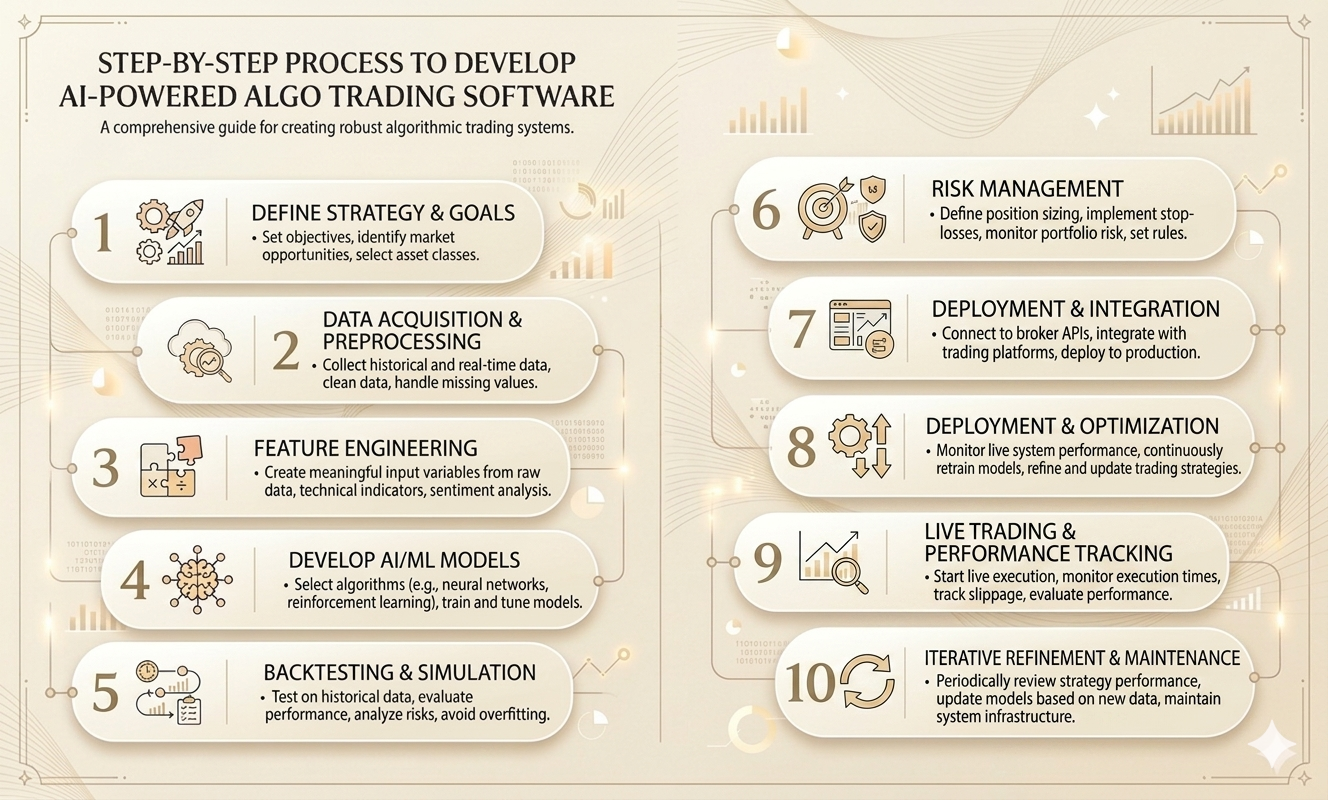
Step-by-Step Process to Create AI-Powered Algo Trading Software
Creating AI-powered algo trading software in 2026 requires a combination of advanced technologies, trading expertise, AI integration, and secure infrastructure. Businesses must build a platform that can analyze market data, automate trading decisions, manage risks, and execute trades in real time. A well-structured development process helps ensure the platform is scalable, secure, and capable of handling modern trading demands.
Here is the complete step-by-step process to develop AI-powered algo trading software:
Best Technologies Used for AI Algo Trading Software Development
Building AI-powered algo trading software in 2026 requires a powerful combination of technologies that can handle real-time market analysis, automated trade execution, machine learning models, high-speed data processing, and advanced security.
Here are the best technologies used for AI algo trading software development:
- Python for AI and Trading Algorithm Development
- Java for High-Performance Trading Systems
- Node.js for Real-Time Data Processing
- React for Frontend Development
- TensorFlow and PyTorch for Machine Learning
- Blockchain Technology for Secure Trading
- Cybersecurity Technologies
AI Trading Strategies Trending in 2026
- High-Frequency Trading (HFT)
- AI-Powered Predictive Trading
- Sentiment Analysis Trading
- Quantitative Trading
- Arbitrage Trading
- Scalping Strategies
- Portfolio Optimization Strategies
- Multi-Asset Trading Strategies
- Social and Copy Trading Strategies
Cost to Develop AI-Powered Algo Trading Software
The cost of developing AI-powered algo trading software in 2026 depends on several factors, including platform complexity, AI capabilities, supported markets, security infrastructure, integrations, and custom features. Since modern trading platforms require real-time data processing, machine learning models, automated trading engines, and advanced analytics, development costs can vary significantly from a basic MVP to a fully enterprise-grade trading ecosystem.
Businesses planning to launch AI trading software should understand the major cost components involved before starting development.
Estimated Development Cost Breakdown
|
Development Type
|
Estimated Cost
|
|
Basic AI Trading Platform
|
$15,000 – $40,000
|
|
Mid-Level AI Algo Trading Software
|
$40,000 – $100,000
|
|
Advanced Enterprise AI Trading Platform
|
$100,000 – $300,000+
|
How to Choose the Right Algo Trading Software Development Company?
Choosing the right AI algo trading software development company is one of the most important decisions for your fintech business. A trading platform is not just another software product — it handles real-time financial transactions, sensitive market data, AI-driven automation, and high-speed trade execution. Even a small technical mistake can lead to security risks, performance issues, or financial losses.
That’s why businesses in 2026 are focusing on experienced development partners that understand AI, fintech, cloud infrastructure, and algorithmic trading systems together. The right company can help you launch a scalable, secure, and future-ready trading platform, while the wrong partner can lead to delays, budget overruns, and unstable software.
Here are the key factors to consider when choosing the best algo trading software development company:
- Check Their Fintech and Trading Experience
- Look for companies that have experience developing:
- Algo trading platforms
- Cryptocurrency exchanges
- Stock trading applications
- Forex trading systems
- AI-based financial analytics tools
- High-frequency trading platforms
- Evaluate Their AI and Machine Learning Expertise