What if the next big business opportunity isn’t in oil but in electric power?
The future of transportation is electric and the biggest opportunity isn’t building cars, it’s powering them.
With electric vehicles rapidly taking over the roads, the demand for smart, accessible charging infrastructure is skyrocketing. But here’s the exciting part: you don’t need to manufacture EVs to be part of this revolution. You can build a profitable business around it with the right strategy and, most importantly, a powerful EV charging management platform.
Think about it: every EV on the road needs a reliable place to charge. Behind that errorless experience is a system that handles station monitoring, user access, payments, energy optimization, and real-time data tracking, all managed through an intelligent platform.
In this guide, we’ll walk you through how to start an EV charging business, EV charging platform development process, Cost, profit models, scalability, Key technologies and features.
If you’re an entrepreneur, startup founder, or tech company looking for a future-ready business idea, this is your chance to enter a high-growth, future-proof industry.
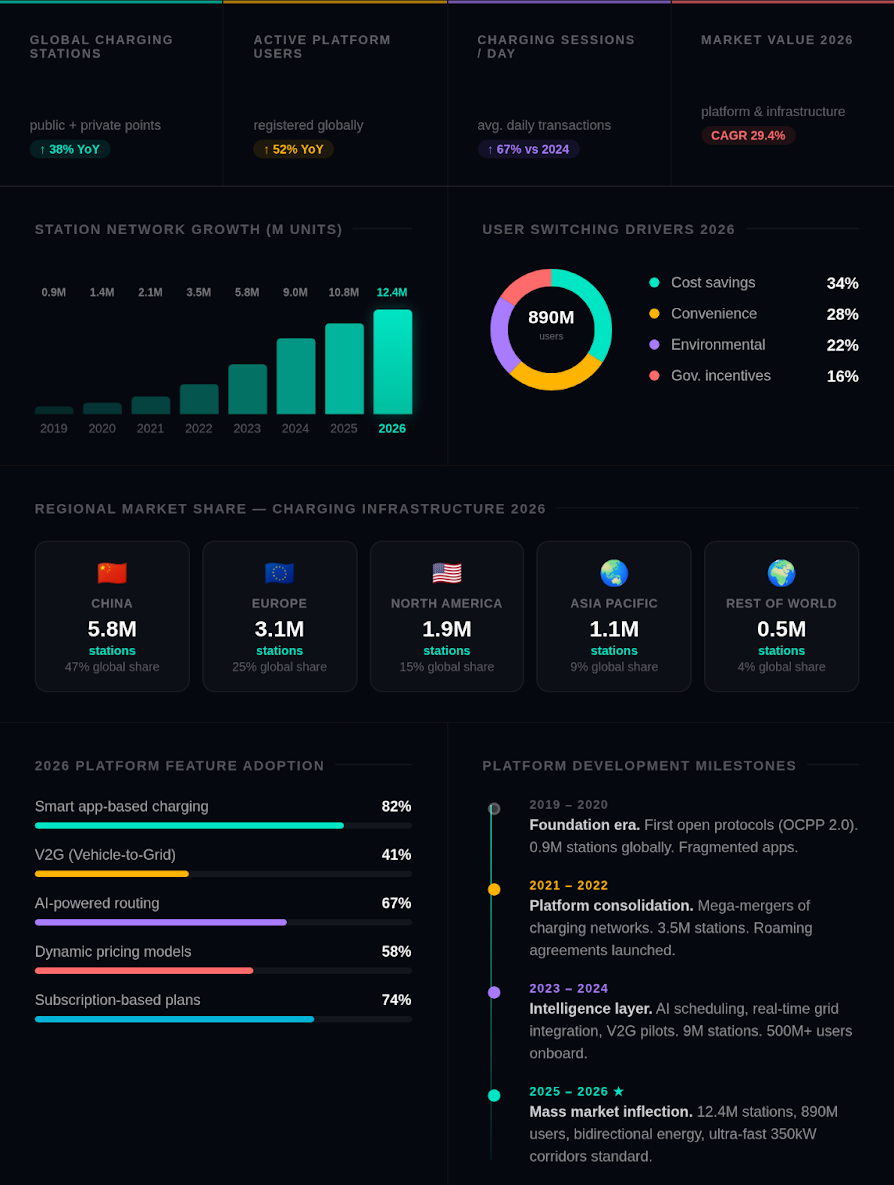
EV Charging Management Platform- Statistical Industry Report
What is an EV Charging Platform?
An EV charging platform is a software system that helps manage, monitor, and operate electric vehicle charging stations. It acts as the brain behind EV charging networks, handling everything from user access and payments to real-time tracking and energy usage. It’s like a control center that connects EV drivers, charging stations, and business owners, making the entire charging experience smooth and efficient.
Real-Life Example
Imagine you’re driving an electric car in a busy city and your battery is running low.
Instead of searching randomly, you open an app powered by an EV charging platform
Here’s what happens:
- The app shows nearby charging stations
- You select a station and navigate to it
- Once you arrive, you start charging through the app
- You can monitor the charging progress in real time
- After charging, you pay digitally- no cash, no hassle
Everything from discovery to payment is handled smoothly through the platform.
How Does an EV Charging Management Platform Work? (Step-by-Step Guide)
If you’ve ever wondered how EV charging works, it’s actually a smart combination of software, hardware, and real-time communication. An EV charging management platform acts as the brain behind the entire process ensuring everything runs smoothly from start to finish.
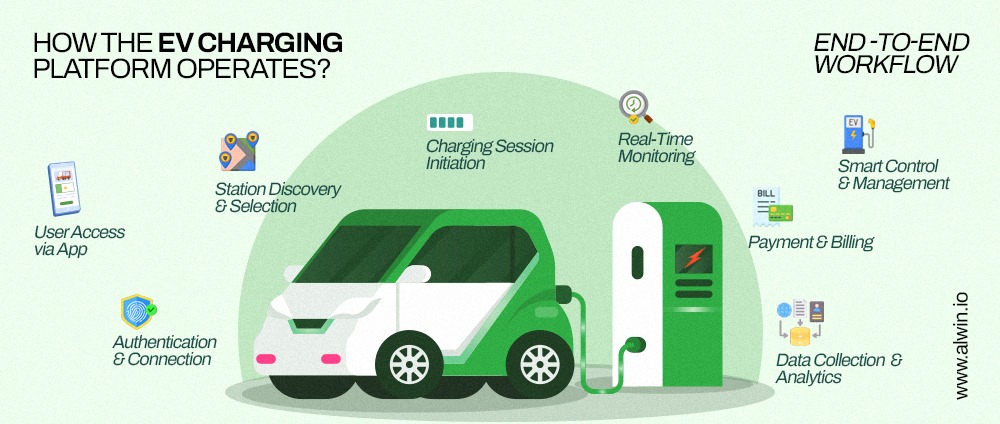
Let’s break it down step by step:
1. User Access via App
The process begins when a user opens the best EV charging app to find nearby charging stations. The app displays real-time data like availability, location, pricing, and charger type.
2. Station Discovery & Selection
Users select a suitable charging station based on their needs. The platform helps them locate the nearest available charger and even provides navigation support.
3. Authentication & Connection
Once at the station, the user connects their vehicle to the charger and authenticates via the app (QR code, RFID, or login). This ensures secure access and proper session tracking.
4. Charging Session Initiation
The user starts the charging session through the app. The platform communicates with the charging hardware to begin the power flow, this is the core of how EV charging works in real time.
5. Real-Time Monitoring
During the session, the platform tracks charging status, energy consumption, time, and cost. Users can monitor everything directly from the best EV charging app without needing to stay near the station.
6. Smart Control & Management
The platform allows users to remotely start, stop, or pause charging. At the same time, operators can monitor station performance, manage load, and ensure optimal efficiency across the network.
7. Payment & Billing
Once charging is complete, the platform automatically calculates the cost based on usage. Secure digital payment is processed through the app, ensuring a smooth and cashless experience.
8. Data Collection & Analytics
All session data is stored and analyzed to improve performance, optimize energy usage, and enhance user experience. This helps businesses make smarter decisions and scale efficiently.
EV Charging Business Models You Should Know
Each EV charging business model offers unique advantages based on your target market, charging network size, and investment strategy.
1. Pay-Per-Use Model
• Charge users based on energy consumption (per kWh) or charging duration.
• This is the most common and easy-to-implement model, ideal for public charging stations.
• Works best in high-traffic areas where occasional users need quick and flexible access.
2. Subscription Model
• Offer monthly or yearly plans with benefits like discounted rates or unlimited charging.
• Perfect for daily commuters and EV owners who rely heavily on charging infrastructure.
• Ensures predictable, recurring revenue while building long-term customer relationships.
3. Fleet Charging Model
• Partner with logistics companies, ride-hailing services, and delivery businesses.
• Provides bulk charging solutions with long-term contracts and consistent usage.
• Highly profitable due to high demand and predictable income flow.
4. Advertising & Partnerships
• Generate additional revenue by displaying ads on apps, charging stations, or digital screens.
• Collaborate with malls, restaurants, hotels, and retail brands to install charging points.
• Attracts more users while creating cross-promotional opportunities and shared benefits.
5. White-Label Platform Model
• Offer your EV charging software as a service to other businesses under their own branding.
• Ideal for scaling into a B2B model without investing in physical infrastructure.
• Creates a strong revenue stream by licensing your platform and technology.
Key Features of EV Charging Software
A modern EV platform is designed to deliver both user convenience and operational efficiency.
Real-time Station Availability Tracking
This feature allows users to view the live status of charging stations, including availability, occupancy, and operational condition. It helps drivers quickly locate nearby free chargers, reducing wait times and improving overall user convenience.
Remote Start/Stop Charging Functionality
Users can initiate or stop charging sessions directly from a mobile app or platform without physical interaction. This ensures a better experience while giving users full control over their charging sessions from anywhere.
Smart Pricing and Billing Management
The platform supports dynamic pricing models based on factors like usage time, energy consumption, or demand. It also automates billing, invoicing, and payment processing, making transactions smooth and transparent for both users and operators.
Energy Consumption Analytics
This feature provides detailed insights into energy usage patterns, charging behavior, and performance metrics. Businesses can use this data to optimize energy distribution, reduce costs, and improve operational efficiency.
Multi-location Management for Businesses
Operators can manage multiple charging stations across different locations from a single dashboard. It enables centralized monitoring, performance tracking, and control, making it easier to scale and operate large EV networks.
Secure Authentication and User Management
Ensures that only authorized users can access the platform through secure login methods such as OTP, RFID, or app-based authentication. It also helps manage user profiles, permissions, and transaction history safely.
EV Charging Platform Development- An Overview
As electric vehicles continue to gain momentum worldwide, the need for smart, scalable, and efficient charging infrastructure has become more critical than ever. This is where EV platform development comes into play, enabling businesses to build and manage seamless charging ecosystems powered by advanced EV charging software and platforms.
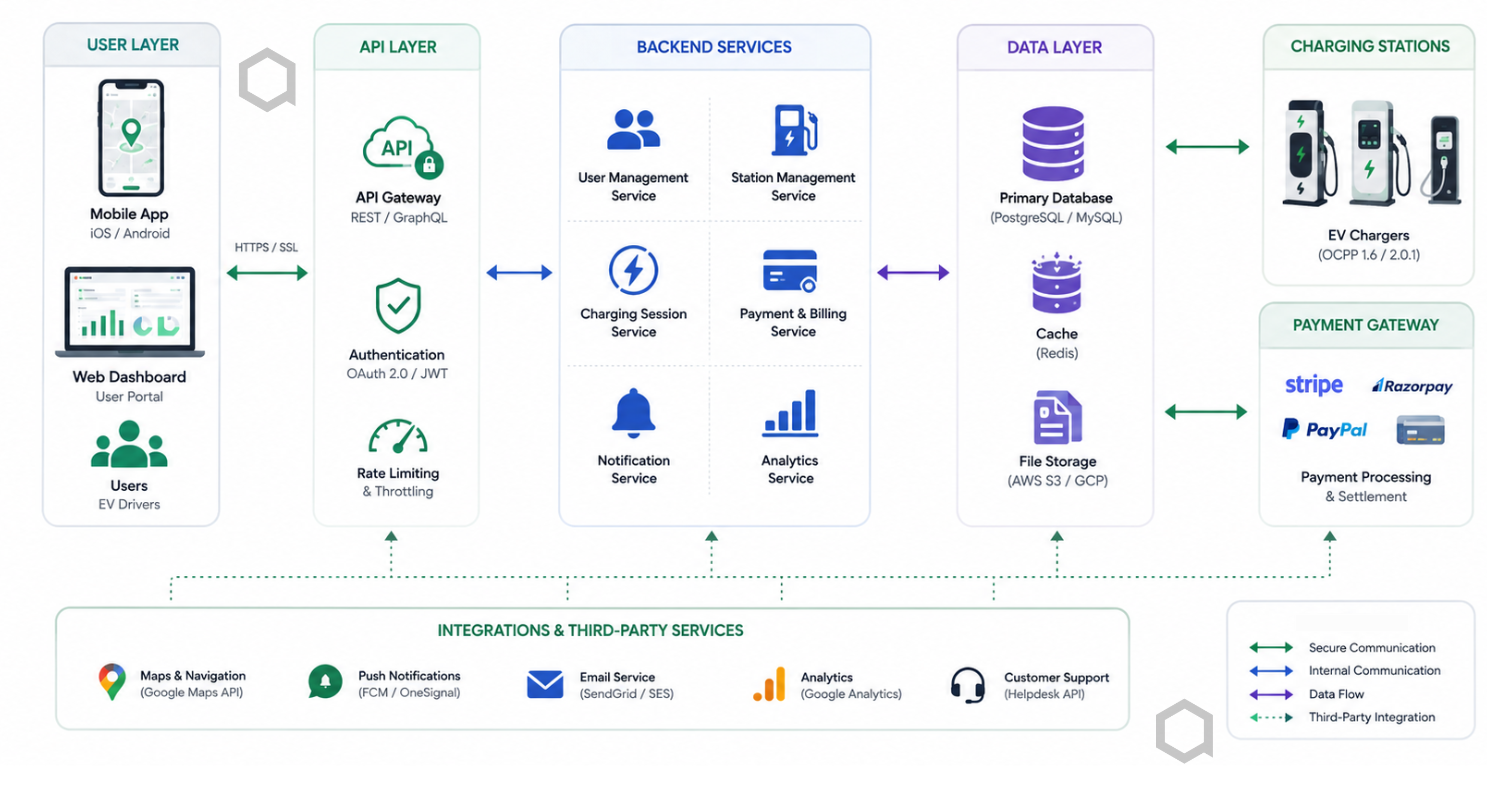
At its core, EV platform development focuses on creating a centralized system that connects charging stations, EV drivers, and service providers. These platforms act as the backbone of EV operations, handling everything from station management and user authentication to payments, analytics, and energy optimization.
Developing an EV charging platform is more than creating software; it involves building a complete ecosystem that supports efficient charging experiences and effective network management.
Core Components of an EV Charging Platform
EV Charging Software – Manages charging sessions, user access, payments, and station operations.
Network Management System – Allows operators to monitor and control multiple charging stations from a centralized dashboard.
Mobile Applications – Help users locate charging stations, start charging sessions, track progress, and make payments.
Payment Integration – Supports secure digital transactions, subscriptions, invoicing, and billing management.
Real-Time Monitoring – Tracks charger availability, station performance, energy consumption, and operational uptime.
Together, these components create a reliable and scalable EV charging ecosystem that supports business growth and user convenience.
EV Charging Platform Development– Technical Overview
|
Technology Area
|
Tools & Technologies
|
|
Backend Development
|
Node.js, Python (Django, Flask, FastAPI), Java (Spring Boot)
|
|
Frontend Development
|
React.js, Angular, Vue.js, Flutter, React Native
|
|
Mobile App Development
|
iOS (Swift), Android (Kotlin, Java), Flutter, React Native
|
|
Cloud & Infrastructure
|
AWS (Amazon Web Services), Microsoft Azure, Google Cloud Platform (GCP)
|
|
Database Management
|
PostgreSQL, MySQL, MongoDB, Firebase
|
|
APIs & Integrations
|
Google Maps API, Stripe, Razorpay, PayPal, Analytics APIs, Notification APIs
|
|
IoT & Hardware Integration
|
OCPP (Open Charge Point Protocol), MQTT, Embedded Systems for EV Chargers
|
|
Real-Time Data & Communication
|
WebSockets, Apache Kafka, Firebase Realtime Database
|
|
Security & Authentication
|
OAuth 2.0, JWT (JSON Web Tokens), SSL/TLS Encryption
|
|
DevOps & Deployment
|
Docker, Kubernetes, Jenkins, GitHub Actions, GitLab CI/CD
|
Production-Ready EV Charging Platform Development
What does it really take to build a production-ready EV charging platform in today’s fast-growing electric mobility space?
It’s not just about installing Electric Vehicle Charging Stations, it’s about creating a flawless, intelligent system that connects users, infrastructure, and data in real time.
As more people switch to the Best Electric Vehicles, expectations are rising. Drivers don’t just want a nearby EV Charge Point, they expect a smooth experience where they can locate available EV Charging Stations, start charging instantly, track progress, and pay effortlessly.
A production-ready solution ensures that every Electric Car Charger is connected, monitored, and optimized through a centralized system. From real-time availability tracking to smart pricing, remote access, and performance analytics, the platform handles everything behind the scenes so users enjoy a hassle-free charging experience.
For businesses, this means more than just managing stations. It’s about scaling operations, maximizing uptime, and delivering consistent service across multiple EV Charging Stations.
Top Strategies to Create a Production-Ready EV Charging Platform
- Focus on Accessibility & Reliability
- Optimize EV Charging Cost
- Ensure EV Charger Integration
- Build for Scalability
- Prioritize User Experience
- Utilize Data & Analytics
- Ensure Security
EV Charging Software & Platform Development Cost
Let’s get straight to what you really need, the actual cost numbers for building an EV charging management platform. The investment can vary widely depending on features, scalability, and integrations.
Overall Cost Range (2026)
|
Platform Type
|
Estimated Cost
|
|
Basic MVP (Minimum Platform)
|
$1000 – $2000
|
|
Mid-Level EV Charging Platform
|
$2500 – $5000
|
|
Commercial / Production-Ready Platform
|
$10,000 – $20,000
|
|
Enterprise EV Charging Management Platform
|
$10,000 – $30,000
|
|
Advanced Large-Scale Ecosystem (Multi-region / AI / IoT heavy)
|
$30,000 +
|
Advanced Module Costs (Enterprise Level)
|
Advanced Module
|
Estimated Cost
|
|
Energy Management System
|
$12,000 – $20,000
|
|
Fleet Management (Logistics / Business Use)
|
$15,000 – $30,000
|
|
Hardware & IoT Integration
|
$12,000 – $25,000+
|
Cost Based on Platform Type
|
Platform Scale
|
Estimated Cost
|
|
Single Location (Basic Setup)
|
Custom-based
|
|
Multi-location Business Platform
|
Custom-specific
|
|
Enterprise Network (Global Scale)
|
Customized
|
Step-by-Step: How to Start an EV Charging Business?
1. Understand Your Market
Start by analyzing your target location. Identify EV adoption rates, existing charging stations, and demand gaps to position your business effectively.
2. Choose the Right Business Model
Decide how you want to generate revenue—pay-per-use, subscription plans, or fleet partnerships. The right model sets the foundation for your profitability.
3. Select a Strategic Location
Pick high-traffic areas like highways, malls, office spaces, or residential zones. Accessibility and visibility play a key role in attracting users.
4. Set Up Charging Infrastructure
Choose the right type of chargers (fast or standard), ensure proper power supply, and plan for scalability as your network grows.
5. Invest in an EV Charging Platform
Implement a smart platform that allows users to locate stations, start charging, and make payments while you manage operations efficiently.
6. Ensure Legal Compliance
Obtain necessary permits, follow safety regulations, and meet local energy guidelines to run your business smoothly and legally.
7. Launch & Promote Your Business
Use digital marketing, partnerships, and local campaigns to attract users and create awareness about your charging stations.
8. Scale and Optimize Operations
Track performance, analyze user behavior, and expand to new locations. Continuous improvement is key to long-term success.
Top EV Charging Challenges and Solutions
Limited Charging Infrastructure
Challenge: Not enough stations to meet growing demand.
Solution: Expand networks in high-traffic areas and partner with businesses.
Long Charging Time
Challenge: Slow charging frustrates users.
Solution: Deploy fast chargers and optimize energy distribution.
High Installation Cost
Challenge: Setting up stations requires a significant investment.
Solution: Use scalable models, government incentives, and partnerships.
Power & Grid Limitations
Challenge: High energy demand can strain the grid.
Solution: Implement smart energy management and renewable integration.
Lack of Awareness & Accessibility
Challenge: Users struggle to find nearby stations.
Solution: Use smart apps with real-time tracking and navigation.
Security & Payment Issues
Challenge: Concerns around data safety and transactions.
Solution: Enable secure authentication and reliable payment gateways.
Why Businesses are Investing in EV Platforms?
The rapid growth of EV adoption is creating massive opportunities for businesses to enter this space.
EV charging software and platforms help businesses to:
- Build scalable charging networks
- Generate revenue through charging services
- Improve operational efficiency with automation
- Enhance user experience with better digital access
- Gain valuable insights through data analytics
Demand > Supply = Huge business opportunity
Ending Thoughts- Why You Should Start Now?
The EV revolution is happening right now and infrastructure is still catching up.
This creates a rare window where:
• Competition is still manageable
•Demand is growing rapidly
• Technology is accessible
Choosing WeAlwin for your EV charging platform development means partnering with a team that truly understands how to turn ideas into scalable, real-world solutions. We go beyond just building software, we design powerful EV charging network platforms that flawlessly connect users, stations, and operations into one smooth ecosystem.
Whether you’re planning to launch or expand your EV charging infrastructure, our solutions are built to grow with you. From a single location to a fully developed public EV charging network, we ensure performance, reliability, and flexibility at every stage. Our approach focuses on delivering a smart EV charging platform that not only manages charging stations but also enhances user experience through real-time tracking, intelligent pricing, and data-driven insights.
What sets WeAlwin apart is our ability to blend technology with practicality, helping businesses create efficient, future-ready platforms that stand strong in a competitive market. If you're looking to build a high-performing EV solution that scales effortlessly and delivers real value, WeAlwin is the partner you can trust to power your journey forward.