DeFi vs Traditional Banking: Which Will Shape the Future of Finance?

Prev 173 Views
Total Words 1185 Total Words
Reading Time 6 mins read

Have Questions or Doubts?

share Share
                  
defi-vs-traditional-banking

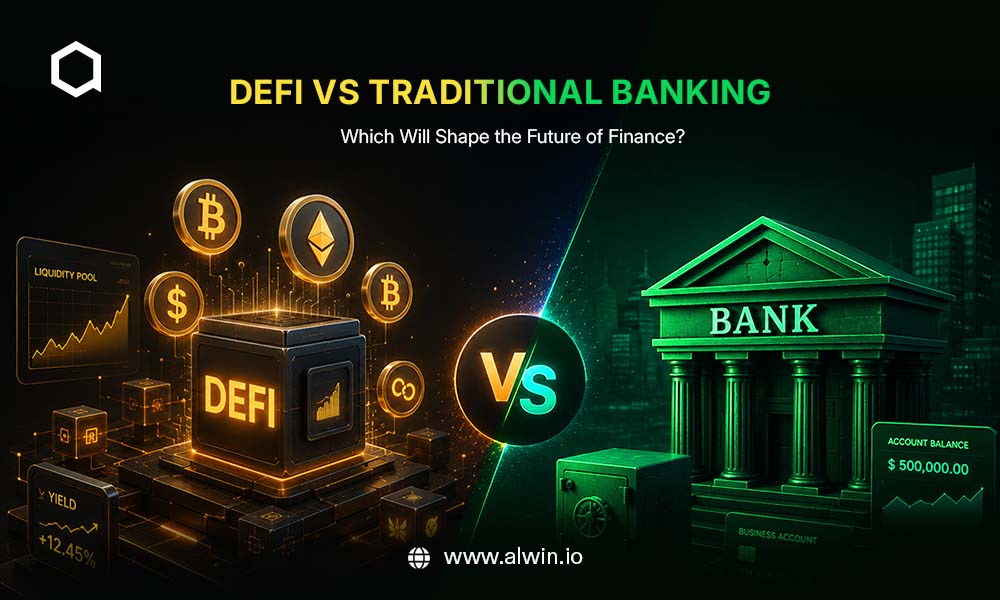
The financial industry is experiencing one of the biggest changes in history. For decades, traditional banks have been the backbone of global finance, offering savings accounts, loans, payment services, and investment products. Today, Decentralized Finance (DeFi) is emerging as an alternative that removes intermediaries and gives users complete control over their financial assets.

With blockchain technology and smart contracts, DeFi allows anyone with an internet connection to access financial services without relying on banks or centralized institutions. As businesses, investors, and governments continue exploring blockchain finance, an important question arises: Will DeFi replace traditional banking, or will both systems work together to shape the future of finance?

This article explores the key differences, benefits, challenges, and future potential of both financial models.

What is Traditional Banking?

Traditional banking refers to the centralized financial system operated by licensed institutions regulated by governments and financial authorities. These banks act as trusted intermediaries for managing deposits, issuing loans, facilitating payments, and safeguarding customer assets.

  • Common Banking Services
  • Savings and current accounts
  • Personal and business loans
  • Credit cards
  • International money transfers
  • Investment products
  • Mortgage financing
  • Wealth management

Traditional banks are trusted because they follow strict regulations, comply with Know Your Customer (KYC) requirements, and often provide deposit insurance that protects customers' funds.

What is DeFi?

Decentralized Finance (DeFi) is a blockchain-based financial ecosystem that allows users to perform financial activities without intermediaries. Instead of relying on banks, DeFi Development platforms use smart contracts to automate transactions securely and transparently.

Users maintain ownership of their assets through cryptocurrency wallets while interacting directly with decentralized applications (dApps).

Popular DeFi Services

  • Decentralized lending and borrowing
  • Crypto staking
  • Yield farming
  • Decentralized exchanges (DEXs)
  • Stablecoin payments
  • Synthetic assets
  • Liquidity pools
  • Tokenized Real-World Assets (RWAs)Unlike traditional finance, DeFi operates 24/7 without geographical restrictions.

DeFi vs Traditional Banking: Key Differences

Feature

Traditional Banking

DeFi

Control

Banks manage customer funds

Users control their assets

Accessibility

Limited by banking hours and region

Available globally 24/7

Transactions

Processed by intermediaries

Executed through smart contracts

Transparency

Limited visibility

Publicly verifiable on blockchain

Approval

Requires verification and documentation

Mostly permissionless

Fees

Multiple service charges

Generally lower transaction costs

Speed

International transfers can take days

Often completed within minutes

Technology

Changes slowly because of regulations

New features are introduced frequently

Advantages of Traditional Banking

Traditional banking remains essential for individuals and businesses because it offers security, compliance, and widespread acceptance.

1. Regulatory Protection

Banks operate under strict financial regulations that help protect customers from fraud and financial instability.

2. Deposit Insurance

Many countries insure customer deposits up to a specified amount, providing additional confidence.

3. Consumer Support

Banks offer customer service, dispute resolution, and fraud recovery options that many DeFi platforms currently lack.

4. Credit Services

Traditional financial institutions evaluate credit history and provide mortgages, business financing, education loans, and other lending services.

5. Broad Adoption

Governments, employers, merchants, and financial institutions worldwide continue to rely heavily on banking infrastructure.

Advantages of DeFi

DeFi introduces a financial model focused on openness, automation, and global accessibility.

Permissionless Access

Anyone with internet access and a crypto wallet can use DeFi services without requiring approval from a bank.

Full Asset Ownership

Users retain complete control over their digital assets rather than depositing them into centralized institutions.

Faster Transactions

Cross-border transfers that traditionally require several days can often settle within minutes using blockchain technology.

Lower Costs

Automation through smart contracts reduces operational expenses and minimizes intermediary fees.

Complete Transparency

Every transaction is recorded on a public blockchain, allowing anyone to verify financial activities.

Continuous Development

Developers regularly build new financial products, including decentralized insurance, prediction markets, tokenized assets, and AI-powered investment protocols.

Challenges Facing Traditional Banking

Despite its strengths, traditional banking faces several limitations.

Slow International Payments

Cross-border transactions often involve multiple intermediaries, increasing costs and settlement times.

High Operational Costs

Maintaining branches, staff, compliance, and legacy infrastructure leads to higher fees.

Financial Exclusion

Millions of people worldwide remain unbanked due to geographic, economic, or documentation barriers.

Limited Banking Hours

Many banking services are unavailable outside business hours.

Challenges Facing DeFi

Although DeFi continues to expand, several obstacles remain.

Smart Contract Risks

Coding vulnerabilities can expose platforms to exploits if security audits are insufficient.

Regulatory Uncertainty

Governments continue developing frameworks for decentralized financial applications.

User Responsibility

Unlike banks, users are responsible for protecting wallet credentials and private keys. Losing access may result in permanent loss of assets.

Cryptocurrency Volatility

Many DeFi protocols depend on crypto assets whose prices can fluctuate significantly.

Scalability

Network congestion on some blockchains can increase transaction fees during periods of high demand.

Why Businesses Are Investing in DeFi?

Enterprises increasingly recognize DeFi as more than a cryptocurrency trend. It offers opportunities to improve efficiency, reduce operational costs, and create new financial products.

Businesses are investing in:

  • Cross-border payment solutions
  • Decentralized lending platforms
  • Stablecoin payment systems
  • Asset tokenization
  • Institutional liquidity solutions
  • Treasury management
  • Automated yield strategies
  • Blockchain-based investment products

Many financial institutions are also exploring hybrid models that combine regulatory compliance with decentralized technologies.

The Role of AI in DeFi

Artificial Intelligence is becoming an important component of modern DeFi ecosystems.

AI supports decentralized finance through:

  • Fraud detection
  • Automated portfolio management
  • Smart risk assessment
  • Predictive market analytics
  • Yield optimization
  • Intelligent trading strategies
  • Personalized financial recommendations

The combination of AI and blockchain is expected to create more efficient and secure financial services over the coming years.

Can DeFi Replace Traditional Banking?

The short answer is not entirely.

Traditional banking provides regulatory oversight, legal protection, consumer trust, and financial stability that remain essential for global economies.

DeFi, on the other hand, offers efficiency, transparency, financial inclusion, and greater user control that traditional systems often struggle to achieve.

Rather than replacing banks completely, DeFi is more likely to complement existing financial infrastructure. Many leading banks are already experimenting with blockchain, tokenized assets, central bank digital currencies, and smart contract automation.

This hybrid approach allows institutions to use decentralized technologies while maintaining regulatory compliance and customer protection.

The Future of Finance        

The future financial ecosystem will likely combine the strengths of both systems.

Emerging trends include:

  • Central Bank Digital Currencies (CBDCs)
  • Tokenized Real-World Assets (RWAs)
  • Cross-chain financial infrastructure
  • Institutional DeFi
  • AI financial services
  • Blockchain-based identity verification
  • Programmable payments
  • Embedded decentralized finance

As regulations mature and blockchain technology continues to evolve, collaboration between traditional financial institutions and DeFi platforms will become increasingly common.

Conclusion

The debate between DeFi and traditional banking is not about choosing one over the other. It is about understanding how both can contribute to a more inclusive, efficient, and reliable financial ecosystem.

Traditional banks continue to provide trust, regulatory compliance, and comprehensive financial services, while DeFi introduces greater transparency, automation, accessibility, and user control.

As blockchain adoption continues to increase, businesses, startups, financial institutions, and governments are expected to adopt hybrid financial models that combine the strengths of both systems. Organizations investing in secure DeFi development services today are preparing for the next phase of blockchain finance.

Ultimately, the future of finance will not be defined solely by banks or decentralized protocols. Instead, it will be shaped by collaboration, technological progress, and the growing demand for faster, smarter, and more accessible financial services.

Latest Blogs