What if owning a piece of a skyscraper was as easy as buying a cryptocurrency?
What if investors could purchase fractions of real estate, private equity, commodities, or infrastructure projects from anywhere in the world without mountains of paperwork or traditional market barriers?
A few years ago, that sounded like a futuristic concept. Today, it's becoming a reality through Real World Asset (RWA) Tokenization.
But here's the bigger question:
Are we witnessing the largest transformation in asset ownership since the creation of modern capital markets?
Why are some of the world's largest financial institutions investing heavily in tokenization infrastructure?
Why are experts projecting the tokenized asset market could reach trillions of dollars in the coming years?
And why are businesses rushing to explore tokenization before the market reaches mainstream adoption?
The answer lies in a simple idea: making valuable assets easier to own, trade, and manage in a digital-first world.
The real question is: How much of the world's value will be tokenized and who will lead the transformation?
Let's explore why Real World Asset Tokenization is capturing global attention and whether 2026 could be the year trillions of dollars in assets make the leap to the blockchain.
Why are Financial Giants Betting Billions on Real World Asset Tokenization?
A few years ago, tokenizing real-world assets sounded like an experiment.
Today, it's one of the fastest-growing sectors in global finance.
The question is no longer "Will RWA tokenization happen?"
The question is "How much of the world's wealth will move on-chain?"
The Market Has Grown More Than 5x in Just One Year
The tokenized RWA market has experienced extraordinary growth between 2025 and 2026:
The active RWA market expanded from approximately $4.1 billion in early 2025 to over $25.2 billion by March 2026, representing more than 500% growth in just over a year. milestone. recorded by May 2026.
Some market trackers report the number has already grown to nearly 888,000 RWA holders globally.
Chainalysis observed a significant increase in wallets created specifically to hold tokenized assets throughout late 2025 and early 2026. 5 years.
These benefits are attracting banks, asset managers, investment firms, and fintech companies worldwide. on-chain. be one of the fastest-growing RWA categories, representing billions of dollars in tokenized value. 4 billion to $5.5 billion. markets move on-chain. by 2030, while some long-term forecasts exceed $30 trillion by 2033–2035. beyond pilot programs and launching real-world tokenized products.
Which Assets are Leading the RWA Tokenization Revolution?
When most people hear "asset tokenization," they immediately think about real estate.
But that's only part of the story.
The fastest-growing categories in Real-World Asset Tokenization Development include:
- Tokenized U.S. Treasuries
- Private Credit
- Real Estate
- Commodities (Gold, Silver, Oil)
- Corporate Bonds
- Investment Funds
- Equities and ETFs
In fact, six major asset classes have already crossed the $1 billion on-chain milestone, demonstrating strong institutional demand for tokenized investment products.
The question is no longer what can be tokenized?
The question is what shouldn't be tokenized?
Why are Investors Choosing Tokenized Assets Over Traditional Investments?
Imagine investing in a commercial building worth $50 million.
Traditionally, you'd need substantial capital, lengthy paperwork, intermediaries, and limited exit opportunities.
Now imagine owning a fraction of that same asset through digital tokens.
That's the value proposition driving Real World Asset Tokenization Development.
Benefits include:
✔ Fractional ownership
✔ Improved liquidity
✔ Faster settlements
✔ Lower transaction costs
✔ Global investor participation
✔ 24/7 accessibility
✔ Transparent ownership records
These advantages are attracting both retail and institutional investors worldwide.
The Role of Blockchain and Smart Contracts in Asset Tokenization
Here's a question:
What happens when ownership transfers, compliance checks, dividend distributions, and reporting are automated?
Operational costs drop dramatically.
Smart contracts are the engine behind Real World Asset Tokenization Development. They automate transactions, enforce rules, reduce manual intervention, and create immutable ownership records.
Instead of relying on multiple intermediaries, businesses can execute transactions with greater transparency and efficiency.
This is one reason why financial institutions view tokenization as a major infrastructure upgrade rather than a temporary trend.
Why Enterprises are Investing in Real World Asset Tokenization Development?
Let's be honest.
Most businesses don't adopt new technology because it's exciting.
They adopt it because it creates measurable value.
Organizations investing in Real World Asset Tokenization Development are pursuing:
- New fundraising opportunities
- Improved asset liquidity
- Global investor access
- Reduced administrative costs
- Faster settlement cycles
- Enhanced transparency
- Automated compliance management
As competition increases, businesses that tokenize assets early may gain a significant advantage in attracting investors and capital.
What Challenges Does Real World Asset Tokenization Solve?
Traditional asset markets face several limitations:
- High entry barriers
- Limited liquidity
- Complex ownership structures
- Cross-border restrictions
- Long settlement periods
Tokenization addresses each of these challenges by creating digitally transferable ownership rights backed by blockchain technology.
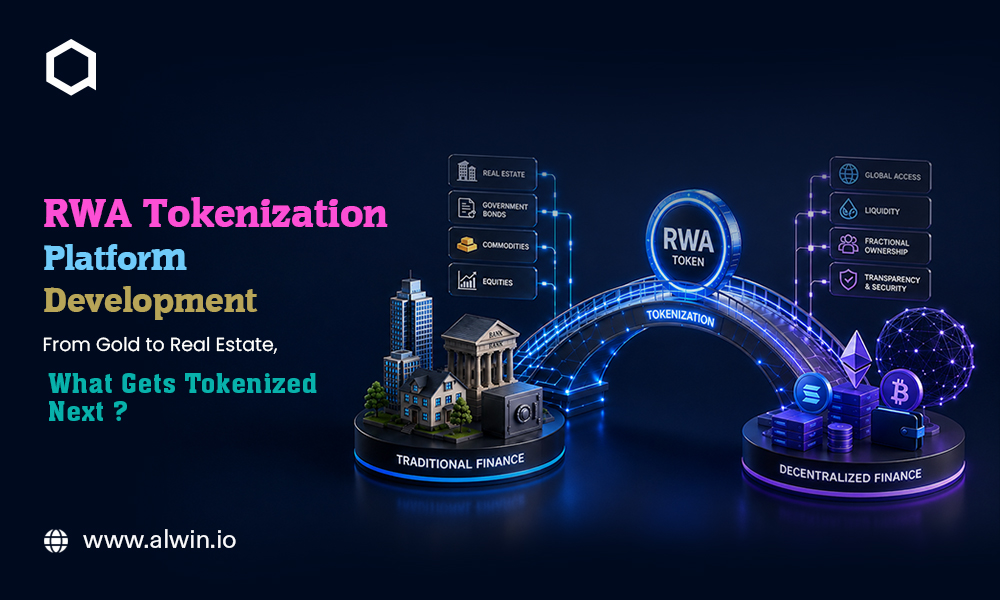
That's why analysts increasingly describe Real World Asset Tokenization Development as the bridge between traditional finance and the digital economy.
Is Real World Asset Tokenization the Future of Capital Markets?
A decade ago, digital assets were viewed as a niche concept.
Today, some of the world's largest financial institutions are launching tokenized investment products, tokenized funds, and blockchain-based asset management solutions.
The numbers tell the story:
More than $25 billion in tokenized assets are already on-chain.
The market has grown approximately 5x since 2023.
Forecasts suggest trillions of dollars could move on-chain by the end of the decade.
If the internet transformed how information moves, Real World Asset Tokenization Development may transform how value moves.
And for businesses, investors, and institutions, that transformation is already underway.
Popular Types of Real World Asset (RWA) Tokenization in 2026
When most people hear Real World Asset Tokenization, they immediately think about real estate.
But the reality is much bigger.
Today, billions of dollars worth of gold, government bonds, private credit, commodities, real estate, and even vehicles are being brought on-chain. In fact, tokenized assets have become one of the fastest-growing sectors in digital finance, with the market expanding rapidly as institutions and investors seek greater liquidity and accessibility.
Let's explore the most popular asset classes being tokenized right now.
1. Gold Tokenization – The Most Successful RWA Use Case
Here's a simple question:
Why buy and store physical gold when you can own it digitally?
Gold tokenization allows investors to own fractions of real, vaulted gold through blockchain-based tokens. Each token is backed by physical gold reserves and can often be redeemed for the underlying asset.
Real-World Examples
- Paxos Gold (PAXG)
- Tether Gold (XAUT)
Together, PAXG and XAUT dominate the tokenized gold market. Tokenized commodities reached over $5.5 billion in value during 2026, while tokenized gold trading volume exceeded $90 billion in a single quarter.
Why It's Popular?
✔ Inflation hedge
✔ Fractional ownership
✔ 24/7 trading
✔ No physical storage hassles
2. Silver Tokenization
Gold may dominate headlines, but silver is quickly gaining attention.
Silver-backed tokens allow investors to gain exposure to precious metals without purchasing and storing physical bullion.
Real-World Examples
- Kinesis Silver (KAG)
- Kinesis Gold (KAU)
Silver tokenization appeals to investors seeking lower-cost entry into commodity markets while maintaining exposure to tangible assets.
3. Real Estate Tokenization
What if you could invest in a luxury apartment with just a few hundred dollars?
That's exactly what real estate tokenization enables.
Properties are divided into digital ownership units, allowing multiple investors to own fractions of residential, commercial, or rental properties.
Real-World Examples
Investors receive rental income and asset appreciation proportional to their ownership share.
Why It's Popular?
✔ Fractional property ownership
✔ Passive rental income
✔ Global investor participation
✔ Improved liquidity
4. Tokenized Government Bonds & Treasury Bills
This is currently the largest institutional RWA category.
Governments issue treasury bills and bonds. Through tokenization, these instruments become accessible on blockchain networks.
Real-World Examples
- BlackRock BUIDL
- Ondo Finance
- Franklin Templeton BENJI
Tokenized Treasuries account for more than $10 billion in on-chain assets and represent one of the fastest-growing institutional sectors in RWA finance.
5. Private Credit & Business Loans
Imagine earning returns from business loans without being a bank.
Private credit tokenization allows companies to tokenize invoices, trade finance, SME loans, and lending products.
Real-World Examples
- Maple Finance
- Centrifuge
- Goldfinch
Private credit has become one of the largest RWA categories because it generates predictable yields while connecting borrowers with global capital.
6. Oil & Energy Asset Tokenization
Can a barrel of oil be traded like a cryptocurrency?
Increasingly, yes.
Energy companies are exploring tokenization of oil reserves, energy contracts, carbon credits, and commodity-backed assets.
Potential Use Cases
- Oil reserves
- Renewable energy projects
- Solar farms
- Carbon credit markets
- Energy trading contractsWhile tokenized oil remains an emerging segment compared to gold and treasuries, analysts expect energy assets to become a major RWA category over the next decade.
7. EV & Mobility Asset Tokenization
One of the newest trends in RWA tokenization is the tokenization of electric vehicle infrastructure.
Imagine owning a fraction of:
- EV charging stations
- Electric vehicle fleets
- Battery storage systems
- Smart mobility infrastructure
- Investors can potentially earn revenue based on asset usage, creating a new investment model for sustainable infrastructure projects.
Emerging Examples
- EV charging networks
- Fleet leasing programs
- Battery-as-a-Service projects
- Green mobility funds
This category is still in its early stages but is attracting growing interest from sustainability-focused investors.
8. Art, Collectibles & Luxury Assets
What if you could own a fraction of a Picasso painting or a rare luxury watch?
Tokenization makes this possible.
Real-World Examples
These platforms divide ownership of valuable artworks into smaller units, making alternative investments accessible to a wider audience.
Which Asset Class Is Winning in 2026?
Based on market adoption and institutional participation, the current leaders are:
- Tokenized Treasuries
- Tokenized Gold
- Private Credit
- Real Estate
- Commodities
- Equities
- Energy Assets
- EV Infrastructure
The biggest takeaway?
Real World Asset Tokenization is no longer limited to cryptocurrencies. From gold and silver to real estate, treasury bills, oil reserves, and EV infrastructure, almost every asset class is beginning its journey on-chain, gaining liquidity, fractional ownership, and global investment access for the digital economy.
Is Now the Best Time to Build a Real World Asset Tokenization Platform?
Let's be honest.
Five years ago, most businesses were asking:
"What is blockchain?"
Today, the question has changed to:
"How can we use blockchain to unlock liquidity, attract investors, and create new revenue streams?"
And that's exactly why Real World Asset Tokenization Development is becoming one of the hottest sectors in finance.
But here's the question many investors and entrepreneurs are asking right now:
Is 2026 the right time to enter the RWA market or have we already missed the opportunity?
The data suggests we're still in the early innings.
The value of tokenized real-world assets has already crossed $25 billion, growing nearly 4x in a single year as institutions pour capital into tokenized treasuries, private credit, commodities, and real estate.
Yet despite this explosive growth, tokenized assets still represent only a tiny fraction of the global asset market.
Think about it.
Global real estate alone is worth hundreds of trillions of dollars.
The global bond market exceeds $100 trillion.
Private equity, commodities, infrastructure, carbon credits, and alternative investments represent trillions more.
And only a very small percentage of these assets are currently tokenized.
The Biggest Pain Point Businesses Face Today
Imagine owning a valuable commercial property.
The asset is worth millions.
But selling it could take months.
Finding investors is difficult.
Cross-border investments involve complex regulations.
Fractional ownership is almost impossible.
Capital remains locked.
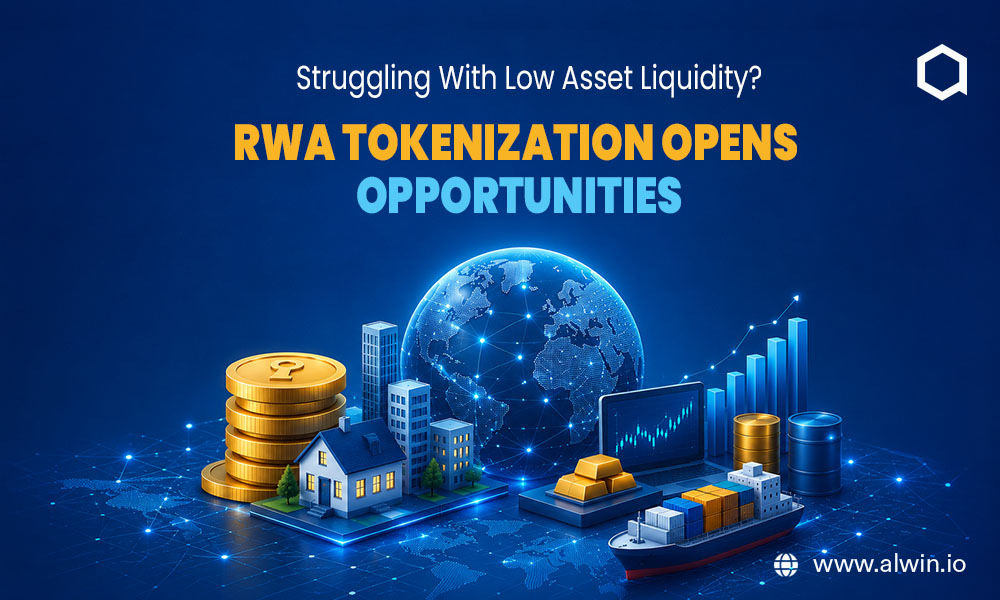
This is the exact problem that Real World Asset Tokenization Development solves.
By converting assets into digital tokens, businesses can:
✔ Unlock liquidity faster
✔ Attract global investors
✔ Enable fractional ownership
✔ Reduce operational costs
✔ Improve transparency
✔ Create entirely new investment opportunities
The pain isn't that businesses lack assets.
The pain is that their assets aren't working efficiently enough.
The Fear Holding Many Businesses Back
Many founders are waiting.
Waiting for regulations.
Waiting for competitors to move first.
Waiting for "the right time."
But here's an interesting fact:
Some of the world's largest financial institutions including asset managers, banks, and investment firms, have already launched tokenized products and are actively building tokenization infrastructure.
The market is no longer asking whether tokenization will happen.
It's asking who will capture the opportunity first.
Why 2026 Could Be a Defining Year?
Consider these projections:
- Current tokenized RWA value: $25B+
- Forecasts for 2030: $4T–$16T
- Some long-term projections: $30T+ by the early 2030s
That means the industry is potentially looking at growth of hundreds of times from today's levels.
When the internet emerged, the biggest winners weren't necessarily those who joined last.
They were the ones who built infrastructure before mass adoption arrived.
Today, Real World Asset Tokenization Development is at a similar stage.
So, Is This the Right Time?
If you're looking for a market that's already saturated, the answer is no.
If you're looking for a market where institutions are entering, regulations are improving, adoption is accelerating, and trillions of dollars are expected to move on-chain over the next decade...
Then 2026 may be one of the most important entry points we'll see.
The Better Question Isn't "Should I Wait?"
It's "Will I Build Before the Market Goes Mainstream or After?"
Because by the time tokenized assets become the standard, the early movers will already own the market.
Conclusion
A decade ago, the idea of owning digital assets sounded unconventional.
Today, millions of people own cryptocurrencies, businesses operate on blockchain networks, and some of the world's largest financial institutions are investing heavily in tokenized assets.
So, what comes next?
Imagine a world where buying a fraction of a commercial building is as simple as purchasing a stock. Where gold, real estate, energy assets, EV infrastructure, private equity, and even future revenue streams can be owned, traded, and transferred globally in minutes.
The real question isn't whether Real World Asset Tokenization Development will transform finance. The momentum, institutional adoption, and market forecasts have already answered that.
The question is:
Will you be an early participant in the transformation or watch it unfold from the sidelines?
As trillions of dollars in assets prepare to move on-chain, businesses, investors, and entrepreneurs have a unique opportunity to be part of one of the biggest shifts in modern financial history.
"Every great financial revolution begins by changing who can participate. Real World Asset Tokenization is doing exactly that."
The assets are real.
The technology is ready.
The opportunity is growing.
Now is the time to tokenize, innovate, and lead the future of digital ownership.