"Cryptocurrency is a fundamental technology for an open society." — Elon Musk
A few years ago, cryptocurrency wallets were simply used to store and transfer digital assets. Today, they have evolved into powerful gateways for DeFi, NFTs, digital identity, and Web3 applications. As adoption grows, users expect more than secure storage, they demand speed, persistent connectivity, intelligent automation, and uncompromising security. This shift marks the beginning of Cryptocurrency Wallet Development 2.0, where AI, multi-chain interoperability, and user-centric innovation are redefining how digital assets are managed in the Web3 era.
A Conversation Everyone Is Starting to Have
Alex: "Did you read the article about future-ready cryptocurrency wallets?"
Emma: "Yes! I thought wallets were just for storing crypto."
Alex: "Not anymore. They're becoming your digital identity, your payment hub, and your access key to the entire Web3 ecosystem."
Emma: "So the wallet is becoming smarter than a traditional banking app?"
Alex: "Exactly. That's what 99% Future-Ready Crypto Wallet Development is all about, building secure, intelligent, and consistent wallets for the future of Web3."
That conversation reflects a broader transformation across the blockchain industry. Modern cryptocurrency wallets are evolving into intelligent platforms that simplify complex blockchain interactions while maintaining strong security, complete user ownership, and a frictionless digital experience.
The Evolution of Cryptocurrency Wallet Development
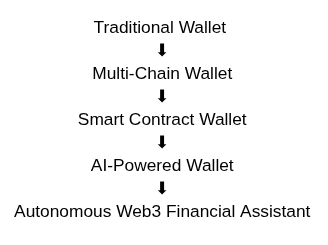
Cryptocurrency wallets have evolved from simple private key storage tools into intelligent Web3 platforms. Modern wallets go beyond secure transactions by supporting multiple blockchains, DeFi, NFTs, smart contracts, and dApps. With AI-powered features, they now offer smarter security, portfolio insights, and automated transaction optimization, paving the way for autonomous Web3 financial assistants.
Evolution Timeline
Intelligent Crypto Wallets: Smarter Security, Simpler Experience
Modern intelligent crypto wallets are designed to simplify blockchain interactions while maintaining strong security, user control, and stable usability. By intelligently analyzing transactions, detecting suspicious wallet addresses, recommending optimal gas fees, and providing personalized portfolio insights, they help users make faster and safer decisions.
Rather than replacing human judgment, these intelligent capabilities improve security, improve efficiency, and deliver a consistent Web3 experience, making cryptocurrency management smarter, simpler, and more secure.
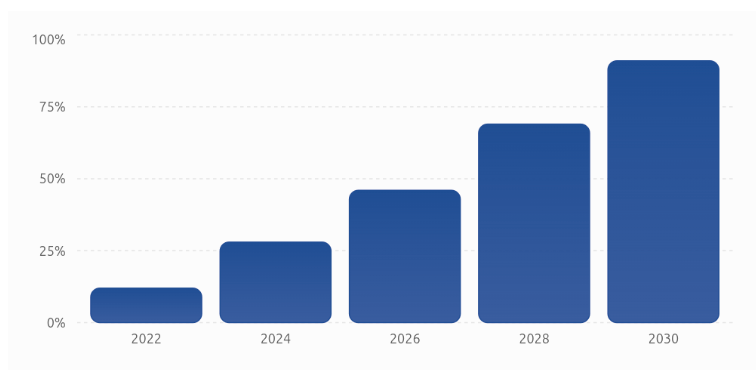
Growth of Intelligent Web3 Wallet Adoption (2022–2030)
Why Businesses Should Invest Now?
Organizations entering the blockchain market need more than a wallet, they need an intelligent financial platform.
Modern cryptocurrency wallets deliver:
- Higher customer engagement
- Reduced fraud losses
- Faster transactions
- Improved user retention
- Better regulatory compliance
- Lower operational costs
- Improved scalability
- Competitive market differentiation
Early adoption enables businesses to establish trust while preparing for the rapidly expanding Web3 economy.
The Core Technologies Behind Modern Wallets
Building a next-generation cryptocurrency wallet requires more than blockchain integration. Developers combine several advanced technologies to create secure, scalable, and user-friendly platforms.
Multi-Chain Compatibility
Users rarely stay on one blockchain.
Modern wallets support networks such as:
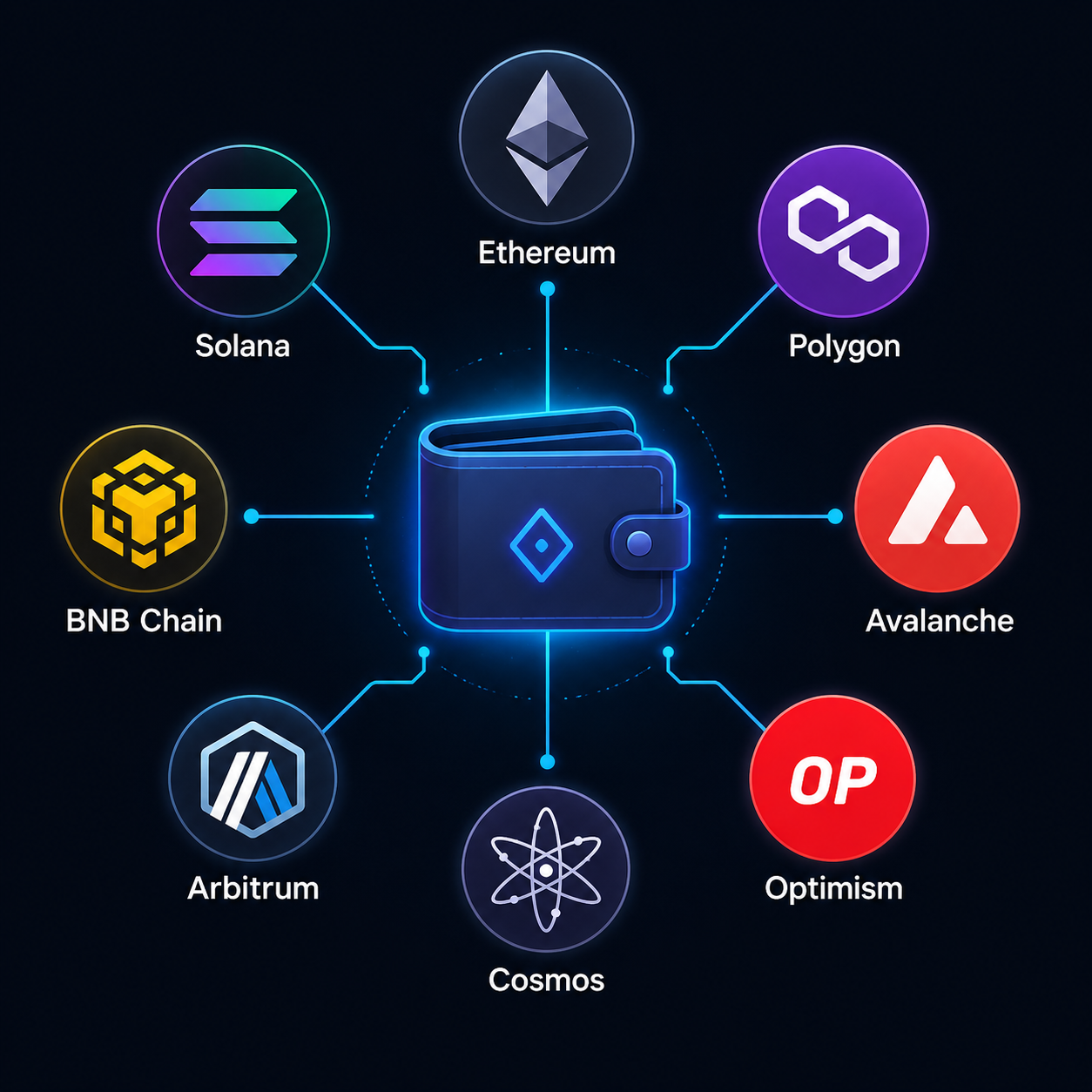
Multi-chain compatibility allows users to manage diverse digital assets without switching between multiple applications.
Advanced Security Architecture
Security remains the most critical aspect of wallet development.
Leading cryptocurrency wallets implement features such as:
- Multi-Party Computation (MPC)
- Biometric authentication
- Hardware wallet integration
- End-to-end encryption
- Secure key management
- Risk detection systems
- Transaction simulation before signing
These technologies significantly reduce the risk of phishing attacks and unauthorized transactions while preserving user ownership.
Intelligent Features That Improve User Experience
Modern wallets increasingly incorporate intelligent assistance where it adds real value, without overwhelming users.
Examples include:
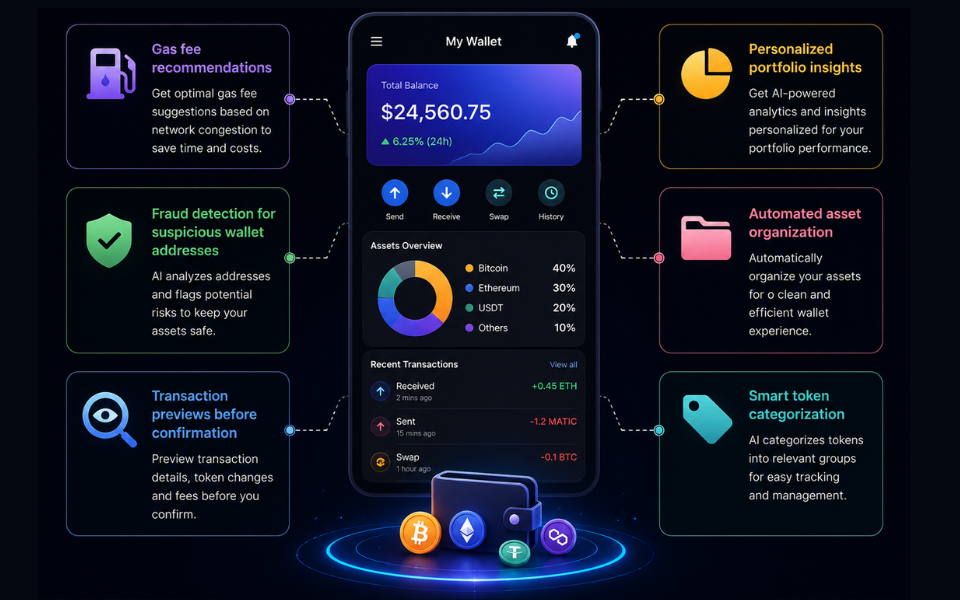
Rather than replacing user control, these capabilities help users make faster and more informed decisions.
Real-World Example: Why Smart Wallets Matter?
Imagine Sarah, a freelance designer who receives payments in USDC from clients in different countries.
Instead of manually checking network fees across multiple blockchains, her wallet automatically suggests the most cost-effective network, flags a suspicious destination address, organizes her NFT certificates, and provides a clear overview of her portfolio, all within one interface.
What once required several applications can now be completed through a single, secure wallet experience.
Building the Next Generation of Web3 Wallets
As Web3 continues to mature, cryptocurrency wallets are becoming much more than applications for managing tokens. They now serve as digital identity managers, payment gateways, authentication tools, and secure access points to decentralized ecosystems.
"The future is a world computer, not a world company." — Vitalik Buterin
This vision is becoming reality. Instead of relying on centralized platforms to manage financial services, users increasingly control their own assets, identities, and permissions through secure cryptocurrency wallets.
A modern wallet architecture typically consists of several core layers:
- Secure key management using MPC or encrypted private keys
- Blockchain communication through RPC nodes
- Smart contract interaction engine
- Multi-chain asset synchronization
- dApp connection layer
- Portfolio analytics dashboard
- Security monitoring and transaction verification
Together, these components create a consistent experience while maintaining the decentralized principles of blockchain technology.
Industry Use Cases for Cryptocurrency Wallets
Future-ready cryptocurrency wallets are no longer limited to individual investors. Businesses across industries are integrating wallet technology into their digital products.
Digital Banking
Financial institutions are exploring blockchain-enabled payment systems where wallets support stablecoin transfers, tokenized assets, and cross-border settlements with lower transaction costs.
NFT Marketplaces
Creators and collectors require wallets that securely store digital collectibles while enabling instant marketplace interactions.
DeFi Platforms
Decentralized finance applications rely on wallet connectivity for lending, staking, liquidity pools, governance voting, and asset management.
Gaming Ecosystems
Blockchain games use wallets to manage in-game assets, digital currencies, character ownership, and marketplace trading without centralized control.
Supply Chain & Enterprise Solutions
Organizations are adopting wallet technology for tokenized documents, digital certificates, ownership verification, and secure asset transfers across business networks.
The Building Blocks of a Future-Ready Crypto Wallet
The most competitive cryptocurrency wallets share several characteristics:
Multi-Chain Asset Management – Manage cryptocurrencies across multiple blockchain networks from a single wallet.
Secure Biometric Authentication – Protect wallet access with fingerprint or facial recognition.
Cross-Chain Token Support – Transfer and manage assets perfectly across different blockchains.
NFT & Digital Collectible Management – Store, view, and manage NFTs securely in one place.
Real-Time Portfolio Tracking – Monitor asset values and portfolio performance with live updates.
Fast dApp Connectivity – Connect securely to decentralized applications with a single click.
Transaction History & Analytics – Track transactions and gain valuable insights into wallet activity.
These capabilities improve usability while maintaining strong security standards expected by modern users.
Best Practices for Crypto Wallet Development
Building a successful cryptocurrency wallet requires balancing performance, compliance, and user trust.
Development teams should prioritize:

A wallet may offer advanced functionality, but long-term success depends on reliability, transparency, and user confidence.
Why Future-Ready Wallets Matter?
Global blockchain adoption continues to grow as businesses and consumers embrace decentralized technologies. From retail payments to enterprise tokenization, cryptocurrency wallets have become the foundation of digital ownership.
A well-designed wallet enables users to:
- Access decentralized applications in seconds
- Manage assets across multiple blockchains
- Secure digital identities
- Participate in staking and governance
- Store NFTs and digital collectibles
- Execute transactions with improved security
As blockchain ecosystems expand, wallets are becoming the first product users interact with. This makes user experience and security equally important.
Want to explore what's next for crypto wallets?
Learn more about the latest innovations and emerging trends in our guide: https://www.alwin.io/future-trends-of-cryptocurrency-wallet
End up
Cryptocurrency wallets have evolved from simple storage solutions into intelligent Web3 platforms that power decentralized finance, digital identity, NFTs, and cross-chain ecosystems. As Web3 continues to grow, future-ready wallets must combine security, interoperability, AI-driven automation, and persistent user experiences.
Organizations investing in advanced wallet development today are building the foundation for the next generation of digital finance, where trust, innovation, and connectivity drive long-term success across fintech, DeFi, gaming, and enterprise applications.
Secure in every step. Smarter with every transaction. Stronger for every future.
Build today. Lead tomorrow. Power the future of Web3.