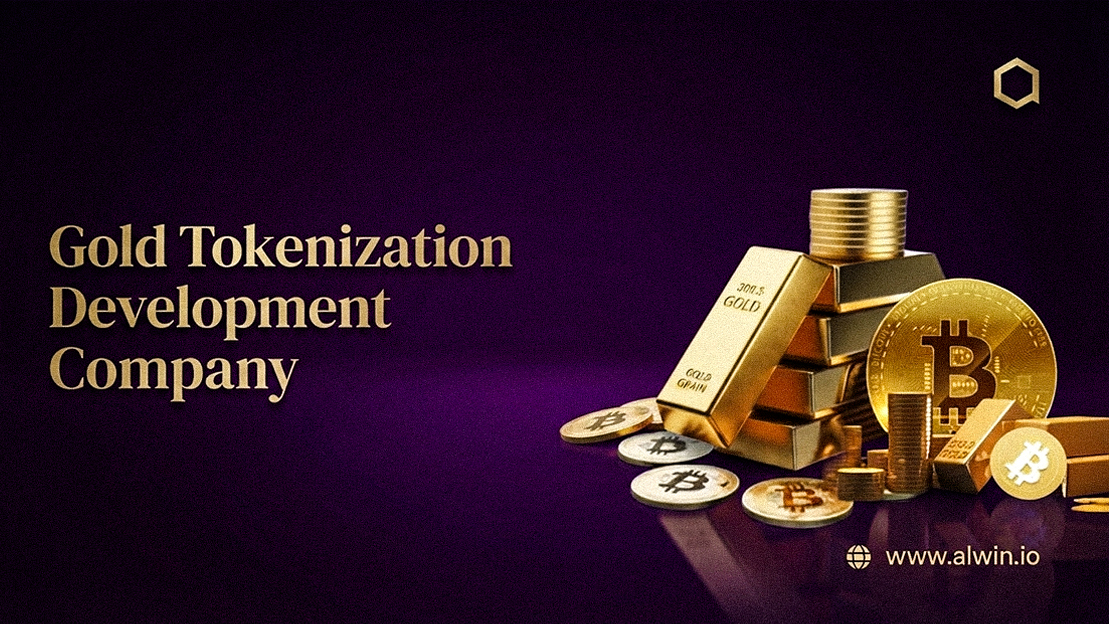
Gold remains one of the world’s most trusted assets, but the way people own, trade, and manage gold is changing. Businesses can now represent physical gold through blockchain-based digital tokens, creating new opportunities for digital ownership and asset management. A gold tokenization development company helps enterprises build digital gold platforms that connect physical gold reserves with token issuance, KYC, compliance, smart contracts, wallets, trading, and redemption. With the right platform structure, businesses can make gold-backed assets easier to manage, track, and access across digital markets while keeping clear records of the underlying gold and token supply.
- Turn gold into digital assets: Represent verified physical gold through blockchain-based tokens with clear asset records.
- Build a complete digital gold platform: Bring custody, KYC, compliance, wallets, smart contracts, trading, and redemption into one system.
- Create clear asset tracking: Record token issuance, ownership, transfers, and redemption on a transparent blockchain network.
In this blog, we explain what gold tokenization development means, how digital gold platforms work, which features and technologies they need, and what businesses should consider when building a secure and compliant gold-backed token platform.
Why are Businesses Moving Toward Tokenized Gold?
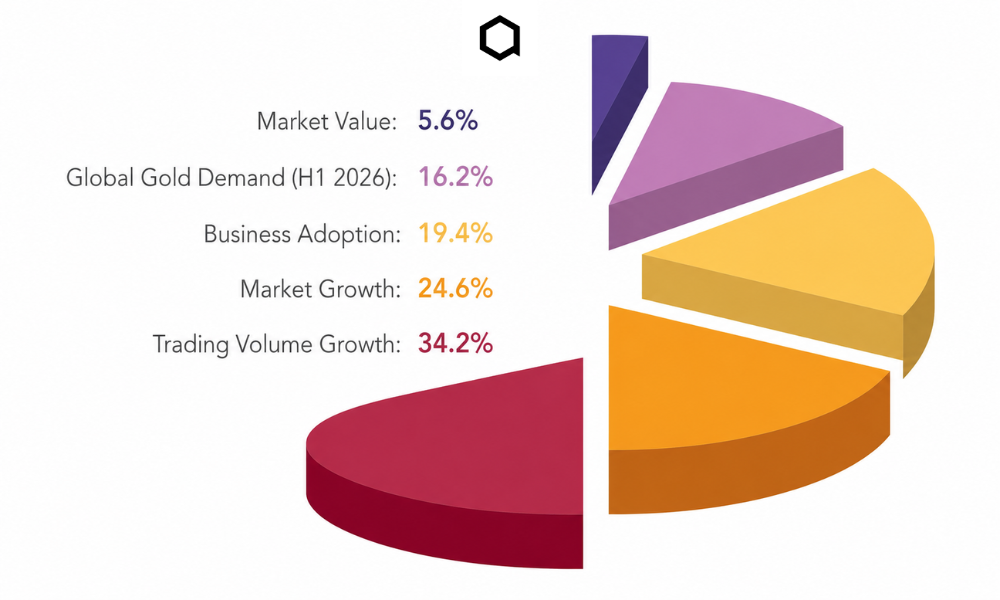
- Tokenized gold recorded $90.7 billion in spot trading volume in Q1 2026, already exceeding the $84.6 billion recorded throughout 2025, showing strong growth in digital gold activity.
- The tokenized gold market has grown beyond $5 billion in market value, reflecting rising demand for blockchain-based gold ownership and investment.
- Global gold demand reached 2,522 tonnes in H1 2026, supporting continued interest in gold as a long-term financial asset.
- Businesses are adopting tokenized gold to combine physical gold value with digital ownership, fractional access, 24/7 trading, and blockchain-based financial applications
What Is Gold Tokenization Development?
Gold Tokenization Development is the process of converting physical gold into digital tokens that are recorded on a blockchain. Each token represents a specific amount or value of gold that is held and managed through a secure custody system. This allows businesses to create digital gold platforms where users can buy, hold, transfer, and redeem gold-backed tokens. In simple terms, gold tokenization connects real-world gold with blockchain technology, making gold ownership easier to access, manage, and transfer in a digital environment.
Why are Enterprises Investing in Digital Gold Platforms?
Enterprises are investing in digital gold platforms because they offer a modern way to bring traditional gold into the digital financial market. These platforms connect physical gold with blockchain-based tokens, giving businesses a clear system to issue, manage, transfer, and redeem digital gold assets. Gold Tokenization Development supports this model by combining blockchain technology, smart contracts, secure custody, and transparent ownership records.
Digital gold platforms also give enterprises more ways to serve investors and customers. Businesses can offer fractional gold ownership, digital transfers, and convenient online access without requiring users to manage physical gold directly. This creates opportunities for new investment products, broader market access, and additional revenue streams while making gold investment easier for digital-first users.
Security, transparency, and operational efficiency further strengthen the investment case. Blockchain can maintain verifiable transaction records, while smart contracts can automate processes such as token issuance, transfers, and redemption. With proper KYC, compliance, custody, and asset verification systems, Gold Tokenization Development can help enterprises build trusted digital gold platforms that connect the long-standing value of gold with the growing digital asset economy.
How Does a Digital Gold Platform Work?
A digital gold platform lets users buy, hold, transfer, and redeem gold online. It connects physical gold with digital ownership, making gold easier to manage through a digital platform.
With gold tokenization development, businesses can represent verified physical gold as digital tokens. These tokens can record ownership and support transfers, trading, and redemption.
Digital Gold Platform Work Process
1. Gold Acquisition
Physical gold is purchased from verified sources and added to the platform's reserve.
2. Gold Verification
The gold is checked for purity, weight, authenticity, and ownership before storage.
3. Secure Custody
Verified gold is stored safely with a trusted custodian and linked to digital records.
4. Gold Tokenization
The physical gold is represented through digital units or blockchain-based tokens.
5. User KYC
Users register on the platform and complete the required identity verification process.
6. Digital Gold Purchase
Users select the amount of gold they want and receive the matching digital gold units after payment.
7. Ownership Tracking
The platform records user balances, transactions, and ownership changes through its digital systems.
8. Transfer or Trading
Users can transfer or trade their digital gold when these features are supported by the platform.
9. Gold Redemption
Users can redeem eligible digital holdings for physical gold when redemption is available.
10. Reserve Monitoring
The platform regularly checks digital records against physical gold reserves to maintain accurate records.
Simple Workflow
Gold Acquisition → Verification → Custody → Tokenization → KYC → Purchase → Ownership → Trading → Redemption → Monitoring
How Asset-Backed Gold Tokens Create Digital Ownership?
Asset-backed gold tokens connect physical gold with digital ownership through blockchain technology. First, verified gold is stored securely with a trusted custodian. Digital tokens are then issued to represent a specific amount of that gold. The blockchain records each token and its ownership, giving users a clear and traceable digital record. This allows investors to hold, transfer, and manage gold ownership digitally without moving the physical metal.
The process combines gold verification, secure custody, smart contracts, and token issuance to create a direct link between physical assets and digital ownership. When a user buys a gold-backed token, the transaction is recorded on the blockchain and linked to the underlying gold. Gold tokenization development services help businesses build this system with features such as token creation, smart contract management, custody integration, compliance checks, and redemption support. This gives users a simple way to access gold as a digital asset while maintaining a clear connection to the physical gold behind each token.
Key Benefits of Gold Tokenization Development Solution for Enterprises
1. Fractional Gold Ownership
Gold tokenization divides physical gold into smaller digital units, making gold ownership more accessible to investors with different budgets.
2. Transparent Gold Reserve Tracking
Blockchain provides clear records of gold reserves, token ownership, and transactions, helping enterprises improve asset visibility and trust.
3. Direct Token-to-Gold Redemption
Eligible token holders can redeem their digital tokens for physical gold based on the platform’s redemption terms, creating a clear link between digital and physical assets.
4. Programmable Gold Asset Transfers
Smart contracts automate gold-backed token transfers based on predefined rules. Gold tokenization development services help enterprises manage these digital asset transfers efficiently.
5. 24/7 Tokenized Gold Market Access
Tokenized gold supports digital trading and asset transfers around the clock, giving enterprises more flexibility to serve users across global markets.
Core Features of an Enterprise-Grade Gold Tokenization Platform
Dual-Auditing & Proof of Reserves (PoR)
Dual auditing verifies that the physical gold held in custody matches the tokens issued on the platform. Proof of Reserves (PoR) gives enterprises clear visibility into gold holdings, token supply, and asset backing.
Secure Vault Custody Integration
Secure vault integration links tokenized gold with trusted physical storage facilities. Enterprises can monitor custody records, reserve ownership, and gold movements while keeping the underlying assets protected.
Compliance-First Smart Contracts
Compliance-first smart contracts can apply KYC, AML, transfer limits, and investor eligibility rules to token transactions. These built-in controls help enterprises manage gold-backed assets according to their business and regulatory requirements.
Instant Physical Redemption Engine
A physical redemption engine connects digital gold ownership with physical redemption requests. Automated verification and settlement can make the process faster while keeping every redemption record clear and traceable.
High-Fidelity Price Oracles
High-fidelity price oracles provide accurate and timely gold market data to the platform. This helps enterprises maintain fair token pricing for trading, settlement, collateral management, and financial reporting.
DeFi and Secondary Market Interoperability
DeFi and secondary market interoperability gives tokenized gold wider use across digital financial markets. A well-built gold tokenization development solution can connect gold-backed tokens with trading, lending, and other approved digital asset applications.
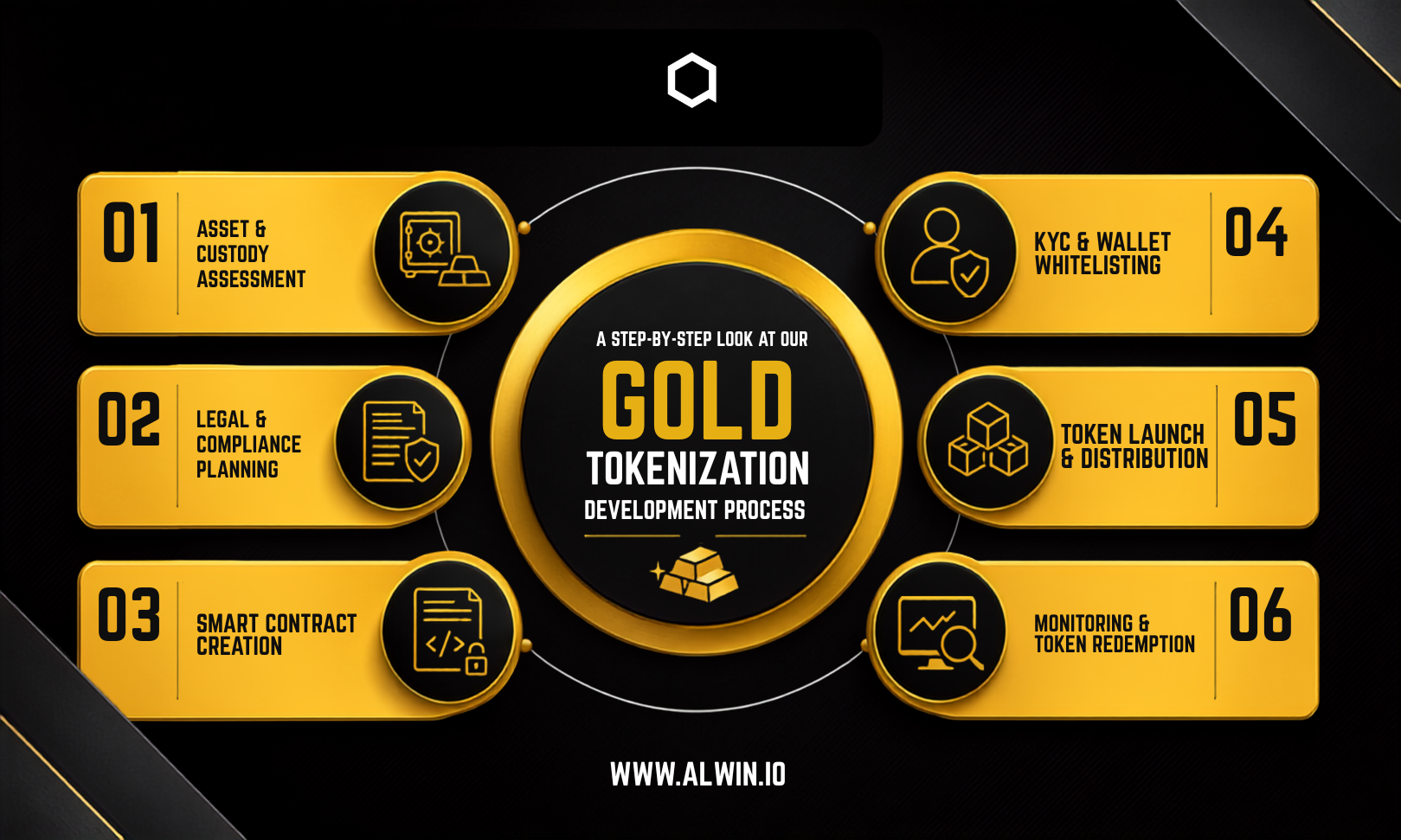
A Step-by-Step Look at Our Gold Tokenization Development Process
1. Asset & Custody Assessment
We start by reviewing the gold assets, ownership records, storage facilities, and custody arrangements. This step defines how each digital token will represent verified physical gold and how the underlying assets will be managed.
2. Legal & Compliance Planning
We then establish the legal structure, token ownership rules, KYC/AML requirements, and applicable regulations. A clear compliance plan helps businesses build a gold tokenization platform that follows the required legal and operational standards.
3. Smart Contract Creation
Smart contracts are developed to manage token issuance, transfers, ownership records, and redemption rules. We test the contract logic carefully to confirm that token supply, transaction conditions, and asset backing work correctly.
4. KYC & Wallet Whitelisting
The platform connects KYC procedures to verify users before they can access gold-backed tokens. Wallet whitelisting adds another layer of control by allowing token transfers only between approved blockchain addresses.
5. Token Launch & Distribution
After development, testing, and compliance checks are completed, the gold-backed tokens are issued according to the approved token model. The distribution system can support token purchases, transfers, and controlled access for verified users.
6. Monitoring & Token Redemption
After launch, the platform tracks token activity, transactions, asset backing, and redemption requests. Users can manage their token holdings while eligible tokens can be redeemed through the defined physical gold or settlement process.
A structured gold tokenization development company process connects physical gold with blockchain-based ownership in a clear and controlled way. Each stage, from asset assessment and compliance planning to smart contract development, token distribution, monitoring, and redemption, supports a specific business and user need.
What Factors Influence Gold Tokenization Platform Development Cost?
The gold tokenization platform development cost mainly depends on the platform’s features, blockchain, security, compliance, and gold custody requirements. A clear project scope helps businesses estimate the budget and avoid unnecessary development expenses.
- Platform Features: Token creation, trading, transfers, redemption, and portfolio tools affect development time and cost.
- Blockchain & Smart Contracts: Network selection and smart contract complexity influence technical development and testing costs.
- Security & Compliance: Wallet security, KYC, AML, audits, and transaction monitoring add to the overall budget.
- Gold & Third-Party Integration: Vault systems, gold price feeds, payment gateways, and custody services require additional integration work.
A gold tokenization development company can assess these requirements and create a practical cost plan. Starting with core features can keep the initial budget under control while supporting future growth. A scalable platform structure also makes future upgrades and integrations easier.
The Future of Digital Gold Tokenization Development Services
- Gold tokenization development services will make physical gold easier to represent, own, and trade as digital assets.
- Future platforms will use automated KYC, AML, and gold verification to support secure and transparent transactions.
- Multi-chain support will help tokenized gold move across blockchain networks and reach wider markets.
- Fractional gold ownership will give investors more flexible access to gold with smaller investments.
- AI-powered pricing, analytics, and portfolio tools will help investors make faster and smarter decisions.
Why are We the Right Partner for Gold Tokenization Development?
Gold tokenization is creating a new way to own, manage, and trade gold through blockchain technology. A successful gold tokenization platform needs secure token creation, verified gold assets, smart contracts, clear ownership records, compliance support, and a simple user experience. Choosing the right RWA tokenization development company can help businesses bring these elements together in one trusted platform. WeAlwin develops gold tokenization solutions with a focus on security, transparency, scalability, and real business needs. If you are ready to bring physical gold into the digital market, partner with WeAlwin to build a secure and scalable gold tokenization platform for long-term growth.