A Conversation That Every Web3 Founder Should Have
"We built a blockchain platform. Why aren't users staying?" Shalini looked at the analytics dashboard with disappointment.
Akash smiled and asked, "Did you build a blockchain product... or did you build an experience people actually want to use?"
Shalini paused.
"The wallet," Akash continued, "isn't just a login screen anymore. It's the entire customer journey."
That single statement changed the discussion.
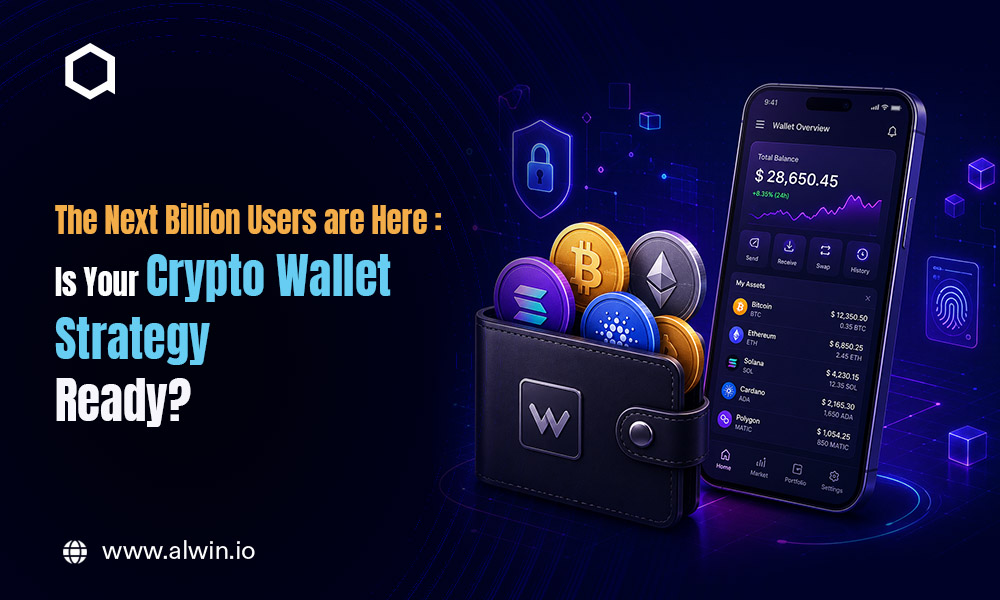
Today, cryptocurrency wallets have evolved beyond storing digital assets. They are becoming digital identity hubs, payment gateways, NFT vaults, DeFi access points, and secure authentication systems. As millions of first-time users enter Web3 over the next few years, businesses must rethink how they design, secure, and scale their wallet infrastructure.
"The best way to predict the future is to invent it." - Alan Kay
The next billion users will not tolerate complicated wallet setups, confusing interfaces, or weak security. They expect wallet experiences that feel as simple as modern banking apps while delivering enterprise-grade blockchain security.
Global Cryptocurrency Wallet Adoption Growth
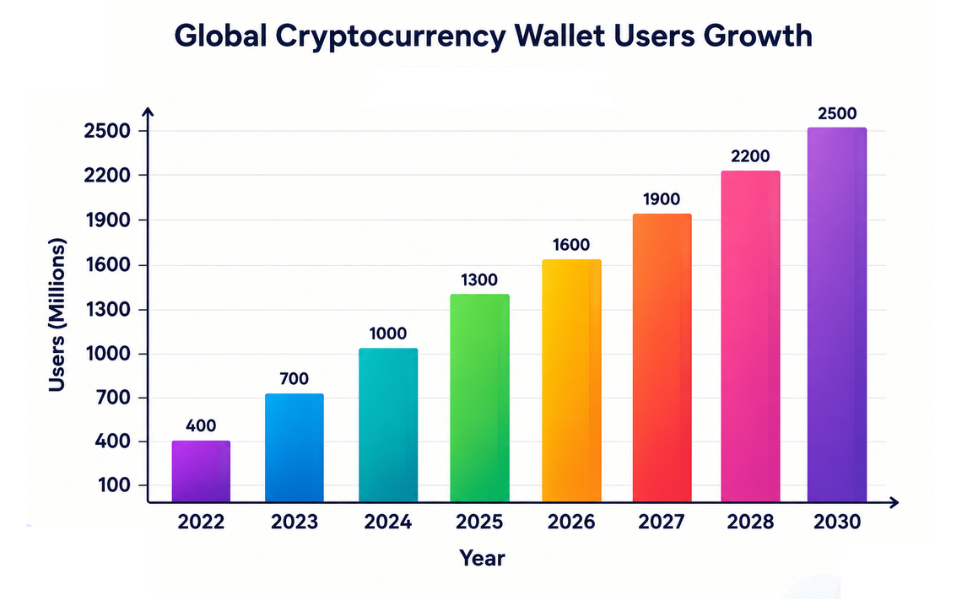
Key Insight: Wallet adoption is accelerating because blockchain applications are expanding into finance, gaming, healthcare, digital identity, and enterprise ecosystems.
Breaking Industry Update:
Why Is Every Enterprise Rethinking Wallet Infrastructure?
More than 560 million people worldwide now own cryptocurrency, driving enterprises to invest in scalable wallet infrastructure that supports secure, stable Web3 experiences. Wallets are no longer just storage applications, they have become the gateway to DeFi, NFTs, tokenized assets, and blockchain payments.
Recent innovations such as embedded wallets, account abstraction, multi-chain interoperability, and passwordless authentication are making blockchain simpler, more secure, and easier for mainstream users. For businesses, cryptocurrency wallet development is now a strategic investment that improves user adoption, retention, and long-term scalability.
Why the Next Billion Users Need Better Wallets?
The first generation of crypto users accepted technical complexity. Seed phrases, manual network switching, and transaction approvals became part of everyday blockchain interactions.
The next generation will not.
Future users expect:
- One-click onboarding
- Passwordless authentication
- Multi-chain asset management
- Instant token transfers
- Built-in recovery options
- Enterprise-grade security
- Mobile-first experiences
A modern cryptocurrency wallet development strategy is no longer about creating a storage application. It is about building the secure gateway to an entire digital ecosystem.
"Innovation distinguishes between a leader and a follower." - Steve Jobs
Organizations that prioritize user-friendly wallet experiences today will be better positioned to attract and retain tomorrow's Web3 users.
Modern Wallet Development Priorities
|
Development Focus
|
Why It Matters for Future Users?
|
|
Multi-chain Support
|
Access assets across different blockchain networks without switching wallets
|
|
Advanced Security
|
Protect digital assets through encryption, MPC, biometrics, and multi-layer authentication
|
|
Simplified Onboarding
|
Reduce user drop-off with frictionless account creation
|
|
Cross-Platform Experience
|
Deliver consistent functionality on mobile, desktop, and web
|
|
Smart Contract Integration
|
Enable DeFi, NFT marketplaces, and automated blockchain interactions
|
|
High Scalability
|
Support millions of users without affecting performance
|
|
Compliance Readiness
|
Prepare for evolving global digital asset regulations
|
The Strategy Shift Businesses Must Make
Many businesses still approach wallet development as a technical project.
The market now demands a business strategy.
As organizations plan for long-term Web3 growth, understanding Cryptocurrency Wallet Development & Its Cost is equally important. Development costs depend on factors such as wallet type, multi-chain support, security features, compliance requirements, third-party integrations, and scalability. Evaluating these factors early helps businesses build a secure, future-ready wallet while optimizing their investment.
Future-ready wallet platforms should combine:
User-Centric Design
Users should complete onboarding within minutes, not hours. Clean interfaces, guided workflows, and intuitive navigation increase adoption.
Intelligent Security Architecture
Security should remain invisible to users while protecting every transaction.
Modern wallets increasingly incorporate:
- Multi-factor authentication
- Device verification
- Private key protection
- Secure recovery mechanisms
- Transaction monitoring
- Multi-signature authorization
Multi-Chain Ecosystem Support
Blockchain ecosystems continue expanding rapidly. Supporting only one network limits user flexibility.
Future-ready wallets should perfectly integrate with multiple blockchain ecosystems while maintaining a unified user experience.
The Technologies Defining the Next Generation of Wallets
The future trends in cryptocurrency wallet development will be shaped by technologies that reduce complexity while increasing trust.
These include:
- Smart account architecture
- MPC (Multi-Party Computation) security
- Account abstraction
- Embedded wallet experiences
- Biometric authentication
- Wallet-as-a-Service integration
- Real-time fraud detection
- Decentralized identity support
Together, these innovations make blockchain applications easier for mainstream users without compromising security.
"The future belongs to those who prepare for it today." - Malcolm X
Preparing today means investing in scalable wallet infrastructure before user demand reaches its peak.
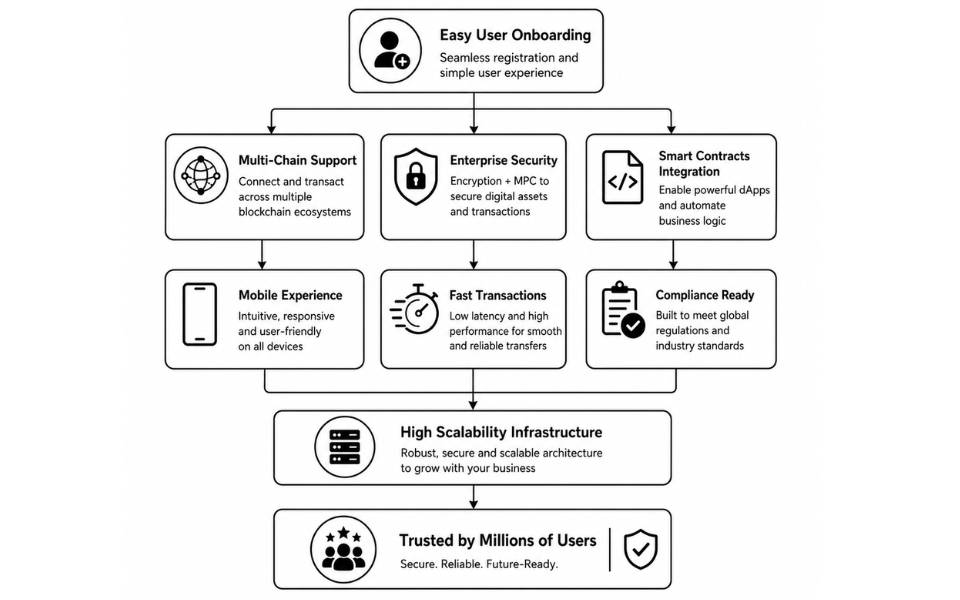
Building a Future-Ready Cryptocurrency Wallet
Future-Ready Wallet Strategy
Business Benefits of a Strong Wallet
A well-planned wallet ecosystem creates long-term business value beyond asset storage.
Key advantages include:
- Higher customer retention
- Increased transaction activity
- Better platform engagement
- Reduced operational risks
- Stronger brand trust
- Faster global expansion
- Improved regulatory preparedness
- Competitive differentiation
As digital finance evolves, the wallet becomes the primary interaction point between businesses and customers.
Organizations that invest in wallet innovation today are building the foundation for tomorrow's blockchain economy.
Real-World Examples
How Industry Leaders are Preparing for the Next Billion Users?
The world's leading blockchain platforms understand one important reality: users stay where the experience is simple.
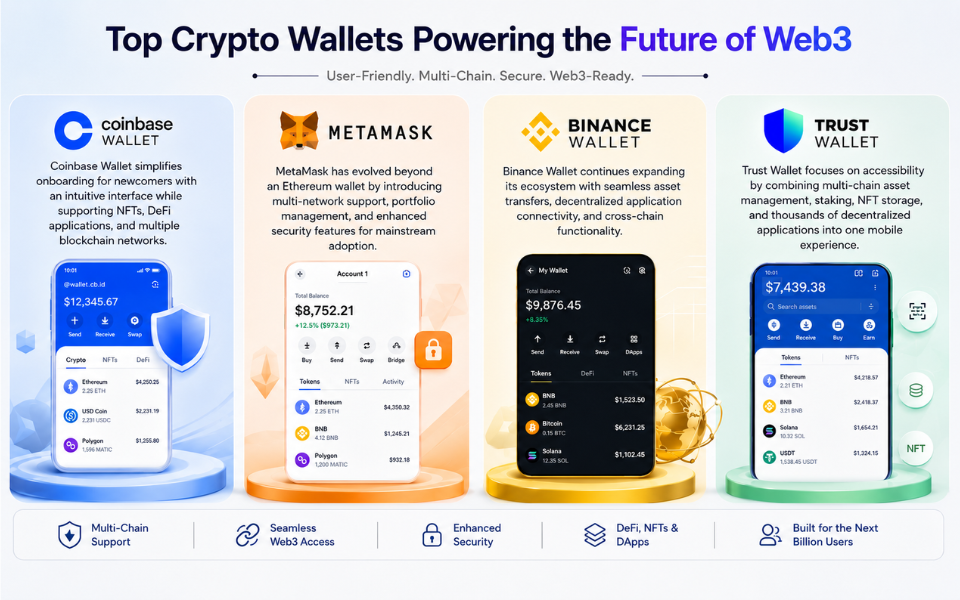
Although each platform follows a different business strategy, they all share one common objective: reducing complexity while increasing user confidence. This approach will define the next generation of cryptocurrency wallet development.
Looking Beyond 2026
The next wave of Web3 adoption will not be driven solely by cryptocurrencies.
It will be powered by:
- Digital identity
- Tokenized real-world assets
- Enterprise blockchain platforms
- AI-assisted financial services
- Cross-border payments
- Gaming economies
- Decentralized commerce
- Tokenized loyalty ecosystems
Every one of these experiences begins with a secure, scalable, and user-friendly cryptocurrency wallet.
The businesses that succeed will focus less on blockchain technology itself and more on delivering effortless user experiences backed by enterprise-level security.
End up
Shalini closed her laptop and smiled.
"So, you're saying the next billion users won't choose the platform with the most blockchain features..."
Akash nodded.
"Exactly."
"They'll choose the platform with the wallet that feels the easiest, safest, and most trustworthy."
Shalini looked at the roadmap one last time.
"Then we haven't just been planning a wallet..."
Akash finished her sentence.
"We've been designing the first experience every future customer will remember."
They both knew the real challenge wasn't building another cryptocurrency wallet.
It was building the wallet that millions of people would trust without thinking twice.
Because when the next billion users arrive, they won't ask whether your blockchain is powerful.
They'll ask one simple question:
"Is this easy enough for me to use?"
If your answer is yes, your cryptocurrency wallet development strategy is already prepared for the future. If not, now is the time to build a wallet experience that combines intuitive design, enterprise-grade security, multi-chain compatibility, and stable scalability, because the next billion users won't wait for businesses to catch up.