What if an options trading strategy could move from a written set of rules to market execution without requiring a trader to manually watch every price movement?
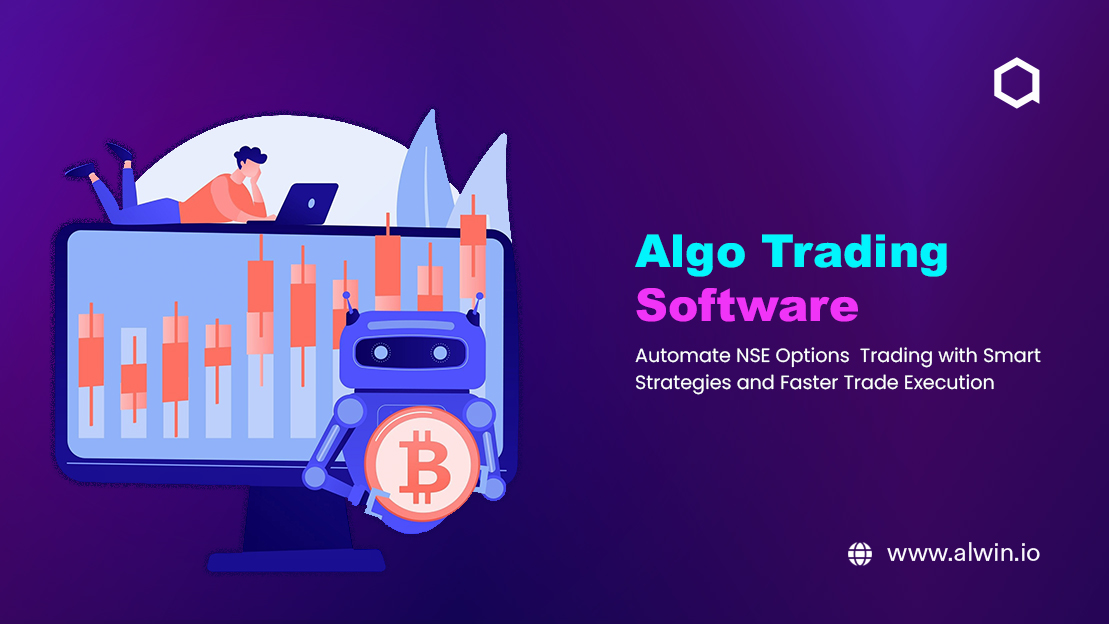
That is the basic idea behind algo trading software for NSE options.
Instead of manually checking charts, identifying signals, selecting contracts, placing orders, and monitoring positions, an algo trading system can perform these tasks based on predefined trading logic. NSE describes automated trading as software that can automatically generate and push buy or sell orders when specified parameters are met.
For traders, brokers, fintech businesses, and founders building trading platforms, the important question is not simply whether automation is possible. The real question is:
How does the software turn an options strategy into an automated NSE trade?
The process normally involves market data, strategy rules, signal generation, risk checks, order execution, and continuous position monitoring.
What does Algo Trading Software actually do?
An Algo Trading software is an Automate program, its work pre-defines rules. You set the rules, you don't need to watch the market, and it places orders automatically when those rules are met. It doesn't guess or predict on its own. It does exactly what you tell it to, without delay and without emotion.
Here is how that plays out. You write your rules, such as which option to trade, at what price to enter, and where to exit if things go wrong. The software then scans the live NSE market and looks for the exact conditions you described. When it finds one, that becomes a signal, and the platform sends the order to your broker automatically, often faster than anyone could do by hand. It keeps tracking the trade after that too, closing it at your target or stop-loss just as you planned. The result is a trading routine that is calmer, more consistent, and fully in your control.
What is Algo Trading Software Automate Options Trading on NSE?
The automation process can be understood through several connected stages.
1. The Software Receives Live Market Data
Automation starts with market data.
The system needs current information before it can evaluate a trading strategy. Depending on the strategy, this can include the underlying index price, option premium, volume, open interest, bid and ask prices, and other market inputs.
For example, an options strategy may monitor:
- NIFTY or BANK NIFTY movement
- Call and put premiums
- Strike-wise price changes
- Volume changes
- Open interest changes
- Technical indicator values
- Expiry-related conditions
The software continuously processes the incoming data and compares it with the strategy rules.
2. The Strategy Engine Checks Trading Conditions
The next stage is the strategy engine.
This is where the trading idea becomes a set of programmable conditions.
A strategy may contain rules such as:
- Enter when a moving average condition is met
- Trade only during a specific market session
- Select an ATM option
- Avoid contracts below a minimum liquidity level
- Enter only when volatility falls within a defined range
- Exit when the target is reached
- Stop trading after a predefined daily loss
The software checks these conditions automatically instead of requiring the trader to evaluate every signal manually.
This is one of the main reasons businesses invest in custom algo trading software. The strategy can be represented as software logic instead of remaining only as a manual trading process.
How Automation Works Step by Step for NSE Options
Algo trading software connects the trading strategy, market data, and broker API into one automated workflow. For NSE options, the process generally follows these steps:
1. Strategy Rules are Defined
The trader first sets the conditions the system should follow. These can include entry price, option strike selection, technical indicators, stop loss, take profit, position size, and exit conditions. The software then evaluates these rules without requiring the trader to manually watch every signal.
2. Live NSE Market Data Is Received
The system continuously receives market data such as option prices, bid and ask prices, volume, open interest, index values, and other required inputs through a market data feed. This gives the strategy current information for decision-making.
3. Trading Signals are Generated
When the live market data matches the predefined strategy conditions, the algo engine generates an entry or exit signal. For example, a strategy may identify a specific movement in NIFTY or BANK NIFTY and then check whether the selected option contract meets its trading conditions.
4. The Order is Sent Through the Broker API
Once a valid signal is generated, the trading engine can send the order to the connected broker through its API. The order can include the selected contract, buy or sell action, quantity, order type, price conditions, and other parameters defined by the strategy.
5. Order and Execution Status are Checked
After submitting the order, the software checks whether it was accepted, rejected, partially filled, or fully executed. This prevents the strategy from assuming that an order was completed when the broker has returned a different status.
6. Open Positions are Monitored
After execution, the system continues tracking the position. It can monitor the option price, unrealized P&L, stop-loss level, target level, position size, and other predefined conditions.
7. Exit Rules are Triggered Automatically
When the exit conditions are met, the system generates an exit signal and sends the corresponding order through the broker API. The position can therefore be managed according to the strategy rules rather than requiring manual intervention at every step.
Can Algo Trading Software Automate Multi-Leg Options Strategies?
Yes, the Trading strategy engine can be designed to handle multiple legs, depending on the implementation and broker/exchange framework.
Examples include:
- Straddles
- Strangles
- Bull call spreads
- Bear put spreads
- Iron condors
- Hedged options strategies
A multi-leg strategy requires more than placing several independent orders.
The software may need to manage:
Leg selection → Entry sequence → Quantity → Price conditions → Risk checks → Execution status → Exit logic
This is where custom Algo Trading Software development becomes important for businesses with strategy-specific requirements.
Key Features to Look for in the Software
Choosing the right platform matters as much as the strategy itself, since even a good plan can underperform on the wrong system. Here are the five features worth checking before you commit to one.
Reliable broker API integration- The software should connect smoothly with your broker and place orders without lag or failed connections, especially during high-volume NSE trading hours.
Speed and low latency- Options prices can shift in seconds, so the platform needs to read data and execute orders fast enough to catch the move you're targeting.
A simple strategy builder- Look for a system that lets you set rules through clear menus or logic blocks, so you don't need to be a programmer to automate your plan.
Built-in risk controls- Features like stop-loss, position limits, and a kill switch help protect your capital automatically, even if you step away from the screen.
Backtesting and reporting tools. The ability to test a strategy on past NSE data and review clear performance reports helps you refine your approach before trading it live.
What Problems Can NSE Options Algo Trading Solve?
Manual options trading can require continuous attention.
A trader may need to watch multiple strikes, monitor price movements, check indicators, calculate position size, place orders, and manage exits.
Algo trading software can automate many of these repetitive activities.
It can help address challenges such as:
Continuous market monitoring
The system can monitor predefined market conditions without requiring the trader to manually check every movement.
Manual order entry
Orders can be generated and submitted based on programmed rules.
Inconsistent execution
A predefined strategy can follow the same programmed conditions across trades.
Complex strategy monitoring
Multiple indicators, strikes, expiry conditions, and risk parameters can be processed together.
Delayed reaction to signals
Automation can reduce the manual steps between signal generation and order submission, subject to the trading infrastructure and market conditions.
Conclusion
NSE options trading can involve constant market monitoring, quick decisions, and repeated order management. Algo trading software brings these activities into one automated workflow, from tracking market data and generating signals to executing trades and monitoring positions.
For businesses looking to turn their trading strategies into software, WeAlwin provides Algo Trading Software Development with custom strategy logic, broker API integration, backtesting, risk controls, automated execution, and real-time monitoring.
The right automation starts with the right strategy. Are you ready to turn your NSE options trading strategy into an automated trading system?